GITA-GEET Chapter 2 (31-38) गीता-गीत द्वितीय-अध्याय श्लोक(31-38)

GITA Chapter 2 (31-38)

गीता द्वितीय-अध्याय श्लोक(31-38)

(युद्ध हेतु प्रेरणा)

कर के विचार अपने, स्वाभाविक धर्म का,

उचित नहीं  संकोच, युद्ध हित कर्म का |

धर्मयुक्त युद्ध से अधिक न श्रेयस्कर,

               अन्य कोई भी कर्म क्षत्रियोचित मर्म का||2-31||


अनायास ही खुले हुए स्वर्ग के द्वार जैसे |

               भाग्यवान क्षत्रिय ही पाते युद्ध उपहार ऐसे ||2-32||

 यदि नहीं करोगे तुम यह धर्म संग्राम अब

                       स्वधर्म और कीर्ति त्याग पाप पाओगे तब ||2-33||


 सब अपकीर्ति कथन करेंगे बहुत काल तक,

 सम्मानित के लिए मृत्यु से बढ़कर अपयश

  महारथी-जन जिनमें हो तुम अति सम्मानित

                        मानेंगे लघु, समझ युद्ध से हटे हो भयबस ||2-34,35||


अहित चाहने वाले वैरी तेरे फिर,

 बहुत सी अकथनीय बातें कहेंगे|

  न इससे बड़ा दुःख होगा कोई जब,

                   तेरे सामर्थ्य की ही निंदा करेंगे||2-36||


पाओगे स्वर्ग यदि मर गए युद्ध में,

भोगोगे पृथ्वी को यदि होगयी विजय|

अर्जुन! दोनों तरह से ही तो लाभ है,

                 अतः उठ जाओ कर युद्ध का निश्चय||2-37||


समझ लो समान ही जीत हो या हार हो,

सुख और दुःख या जो भी हानि लाभ हो|

फिर उसके बाद युद्ध के लिए तैयार हो,

              इस प्रकार युद्ध से न कोई पाप प्राप्त हो||2-38||

Do your duty  Arjuna! it is the duty of a Kshatriya to fight.

Nothing is higher for a Kshatriya than  a war if it is for right.

Considering also your duty as a warrior you should not waver.

As there is nothing more auspicious for a warrior than a righteous war ever. (2-31)

Only for the fortunate warrior, such  opportunities arise

              For an unsought war is like an open door to paradise.||2.32||

This righteous war, if you will not fight.

You will fail in your duty, lose  reputation, and incur sin, as it will not be right. ||2.33||

People will talk about your disgrace forever.

For one accustomed to be honoured, dishonor is worse than death ever. ||2.34||

The great charioteers will consider that you fled the battlefield through fear;

Those will not pay regard to you who hitherto held you in great esteem and are near.

(2-35)

Your enemies will deride your prowess in derogatory terms which should not be said;

It could be much more distressing, when from inside you will be sad. (2-36)


If killed in battle, you will attain heaven;

if victorious, you will enjoy this earthly kingdom.

Therefore resolve to fight and arise!

as in both the cases nothing to lose but to attain some. (2-37)


Having made pleasure and pain, gain and loss,

victory and defeat the same, without reaction.

Develop a balanced mind and engage  in battle,

you shall not incur sin; and cast off the bonds of action. .(2-38)

LEARNING:

  1. One should adopt a profession suiting to his natural instinct and never be scared in performing the assigned duty.
  2. Arjuna was attached to his ‘good name’, an aspirant must realize that these are the very considerations which weaken his resolve to struggle and prove to be a formidable obstacle. The fear of disgrace and pretention of superiority are critical adversaries.
  3. Always fight for the right cause whatever challenge be there, else one can lose one’s

GITA-GEET Chapter 2 (26-30) गीता-गीत द्वितीय-अध्याय श्लोक(26-30)

GITA: LIFE MANAGEMENT MANUAL गीता: जीवन प्रबंध निदेशिका 

GITA-GEET Chapter 2 (26-30)

 गीता-गीत द्वितीय-अध्याय श्लोक(26-30)  

ATTITUDE OF NOT TO GRIEVE

शोक न करने की प्रवृत्ति

मानते आत्मा को, नित्य जन्म ले, मरने के योग्य,

नहीं है फिर महाबाहो! कुछ भी विचारने के योग्य|

 ऐसे जन्म है तो मृत्यु, मृत्यु है तो जन्म निश्चित,

                       तब न इसका उपाय, न कुछ शोक करने के योग्य||2-26,27||

अर्जुन! यहाँ सभी प्राणी न दिखते जन्म-से-पहले,

ये तो मध्य-काल में ही, स्वयं को प्रकट कर लें|

मरने के बाद में भी तो यह हमको नहीं  दिखते,

                     तब शोक कर ही क्यों उनको अपने निकट कर लें||2-28||

निर्गुण निराकार आत्मा को देखना है आश्चर्य,

 दूसरों के द्वारा कुछ भी तो कहना है आश्चर्य |

और आश्चर्यवत ही दूसरे भी हैं सुनते इसको,

                    सुनकर भी केवल कुछ ही तो जान पाते इसको||2-29||

  देहधारी-आत्मा ही, नित्य सबके देह में रहती |

     यह  सदा अबध्य, किसी से कभी नहीं मरती ||

     इसलिये हे अर्जुन! जगत में प्राणियों के लिए |

                 न कुछ शोक-योग्य, इन देह-धारियों के लिए||2-30||

Even if you think that the self is  born and  dies,  then, O mighty-armed (Arjuna), you should not grieve.(2-26)

Because, the one who is born, will die  and birth is certain for the one that has died. The events of death and re-birth are thus unavoidable, and one should not grieve for them. (2-27)

Beings are unmanifested in their beginning, manifested in their middle state, O Arjuna, and are unmanifested again in their end. What is there to grieve about? (2-28).

Someone visualizes It as a wonder; and similarly indeed, someone else talks of It as a wonder; and someone else hears of It as a wonder. Some see the soul as amazing, some describe it as amazing, and some hear of the soul as amazing, while others, even on hearing, cannot understand it at all.(2-29).

This dwelling in the bodies of all, can never be slain; so, Arjun! you should never mourn for anyone.(2-30)

LEARNIGS FROM GITA: As per Lord Krishna, one can’t deliver his best unless he is unattached. In order to be unattached, one should be aware of the basic concept of life. So, Lord Krishna began by conferring upon Arjuna the knowledge of the Atma, the all pervading Self, and showed him the insignificance of the human being in the infinite spectrum of Eternity and of the Universe. He urged Arjuna not to be a coward and grieve for any human-being because he is related to you. And thus He gave him courage to fight for Dharma or the principles of righteousness.


 Reasoning For Not To Grieve:

  1. Each individual soul is bound by three bodies—gross body (physical body), subtle body, causal body. The physical body is a combination of the five elements. It is seen by the physical eyes only after the five elements have entered into such combination. After death, the soul discards its gross body, and departs with the subtle and causal bodies. the body disintegrates and the five elements go back to their source.
  2. Pot is made of mud. After breakage, the pot is again the mud only. There is no pot in the beginning and in the end. Even if you see the pot in the middle, you should think and feel that it is illusory and does not really exist. So also there is no body in the beginning and in the end.

The body can be seen only in the middle state. It can’t be seen before the birth or after the death of an individual. The relationship as son, friend, teacher, father, mother, wife, brother and sister is formed through the body on account of attachment and Moha-Asakti (delusion).

  1. Just as pilgrims unite and separate during the journey in train, bus or in a public inn, so also fathers, mothers, sons and brothers unite and separate in this world only.

This world is a very big public inn. People unite and separate after sometime. After one leaves the public inn and may not meet again. Nobody grieves for him.

  1. The soul, being a fragmental part of God, is more amazing than the things of the world because it is transcendental to material existence. Just as God is divine, its fragment, the soul, is also divine. For this reason, mere intellectual prowess is not enough to comprehend the soul,
  2. That which does not exist in the beginning and in the end must be considered illusory in the middle also.
  3. You must think and feel that the body does not really exist in the middle as well. He who thus understands the nature of the body and all human relationships based on it, will not grieve.


GITA-GEET Chapter 2 (20-26) गीता-गीत द्वितीय-अध्याय श्लोक(20-26)

GITA-GEET Chapter 2 (20-26)

 गीता-गीत द्वितीय-अध्याय श्लोक(20-26)  

INTRODUCTION TO SANKHYA PHILOSOPHY

साङ्ख्य-योग का परिचय (आत्मा)

Mental-Attitude 1

न तो यह जन्म लेती है न ही मरती कभी भी,

न यह हुई, न होगी, न होने जा रही अभी भी |

अजन्मा है यह नित्य शाश्वत यह  पुरातन है,

                जब देह मरती है,  न मरती आत्मा तभी भी ||2-20||


आत्मा को अजन्मा नित्य अव्यय जानता है|

इसे जो व्यक्ति अविनाशी सदा से मानता है

मरवा सकता है किस तरह वह, किसी को

                  सुनो अर्जुन! फिर वह कैसे किसको मारता है||2-21||


पुराने वस्त्र जैसे सब मनुष्य छोड़ देते हैं,

नवीन वस्त्रों को पहन बदन पर ओढ़ लेते हैं|

 जब शरीर जीर्ण-शीर्ण हो तो आत्माएं स्वयं  ,

                     पुनर्जन्म ले नाता नवीन तन से जोड़ लेते हैं ||2-22||


न काट सकते हैं शस्त्र आत्मा को कभी भी ,

न पावक से इसको जलाया ही जा सकता||

जल से भी इसको कभी भिगो नहीं सकते ‘

                 न इसको हवा से सुखाया ही जा सकता||2-23||


न ही कट सकती यह, नही यह जल सकती,

न भीग सकती है, न ही सुखा सकते इसको|

निरंतर, सर्वव्यापी और सदा से ही यह स्थिर,

                अचल और सत्य सनातन सब कहते इसको||2-24||


यह आत्मा है अव्यक्त अतः कहते अवर्णनीय,

निर्गुण-निराकार है अतः नहीं कभी चिन्तनीय |

 परमात्म-तत्व से सम्बद्ध अतः सदा अविकारी,

               यह ज्ञान प्राप्तकर ही तो आत्मा नहीं शोचनीय||2-25||


SANKHYA YOGA

Sankhya is the highest knowledge and that is why Krishna Gives its implications first in chapter two of  Bhagavad Gita. Sanskrit word Samkhya means number. Samkhya philosophy deals with the number and nature of realities or ultimate constituents of the universe emerged from Supreme Energy (ब्रम्ह). Purusha and prakriti are the two components of Supreme Energy (called Brahma)  responsible for the creation of the UNIVERSE. Samkhya states that the individual human being has 24 Reality- elements of nature, or evolutes, that develop progressively out of one another.  When Consciousness, or Purusha, the eternal reality combines with all these Realities of nature, the creation takes place.

Literal meaning of Sankhya is “discrimination” between Purusha (energy of soul) from  Prakriti (Original nature) so as to show the liberation of ‘Purusha’. The focus is to discriminate between purusha and the higher mental states: manas and buddhi, which are part of Prakriti. In these verses of Gita, characteristic features of soul-energy has been explained.

The soul is never born, nor does It ever die; after having been, He has not come into being, does not come into being, and will not come into being. It is unborn, eternal, ever-existing and primeval. Soul is not killed when the body is killed.(2-20)

It slays not, nor is It gets killed. He who knows the Spirit as Indestructible, Immortal, Unborn, Always-the-Same, how should he kill or cause to be killed?(2-21)

As a person puts on new garments, giving up old ones, the soul also renounces old and useless body and holds a new physical body. (2-22)

Since it is formless and shapeless, the soul can never be cut to pieces by any weapon, Fire cannot burn it or destroy it. Water cannot wet it because water can only act on elements which have a physical description or dimension. For the same reason, wind cannot dry it or exert any force on it. This Self is un-manifested, unthinkable and unchangeable (2-23).

That is why it is referred to as nitya or permanent or unchangeable. This permanence gives it the powers of omnipresence, omniscience and stability. It is this stability that gives it the quality of immovability and the aatman is called sanatana. Sanatana literally means – that which is not created or destroyed – it belongs to time immemorial.(2-24)

The aatman cannot be known or understood by purely using the brain and its mental powers. Hence it is known as ‘avyakta’ or indescribable – that which defies description. It cannot be known purely by meditating or thinking upon it (’chintan’) – hence it is known as ‘achintya’. Only those entities that can be perceived by our five senses can be understood by ‘chintan’.

Since the aatman cannot be described by any elements known to man, it is without shape or ‘vikaar’ and is known as ‘avikaari’ or immutable. It is beyond the range of form or thought and the changes that affect the mind, life and body do not touch him. Forms may change; things may come and go but that which remains behind them all is everlasting.(2-25)

Learning from Gita: In these verses, Gita explains that we all are only  souls energised by the everlasting infinite source of Supreme Energy covered with ever-changing body constituted from the different elements of the nature. This shows that

  1. We all are immortals, there is no need to worry about death.
  2. Do your assigned duty fearlessly, nobody can kill you nor you can kill anybody.
  3. For the nature, change is inevitable. Even our body cells are changing every moment, then why we be scared of changes likely to be there in future.
  4. This conclude that everyone should live stress-free happy life.

GITA-GEET Chapter 2 (10-19) गीता-गीत द्वितीय-अध्याय श्लोक(10-19)

A LIFE MANAGEMENT MANUAL GITA

 जीवन प्रबंधन निर्देशिका गीता 

GITA-GEET (गीता-गीत )

GITA-GEET Chapter 2 (10-19)

गीता-गीत द्वितीय-अध्याय श्लोक(10-19)


दोनों सेनाओं मध्य वहां करते विषाद अर्जुन से तब |

                हंसते-हंसते जो वचन कहे भारतवंशी! वह सुनलो अब||2-10||

प्रथम संदेश- वर्त्तमान में रहो (Be in Present)

    जो नहीं शोक-करने-लायक, करते तुम शोक उन्हीं के प्रति|

    विद्वानों जैसा बोल रहे बिन समझे क्या उनकी सम्मति ||

   जो बीत गया,   आने वाला क्या,    पंडित शोक नहीं करते |

                   वे वर्तमान में  ही जीते,      और   तदनुसार  आगे  बढ़ते ||2-11||
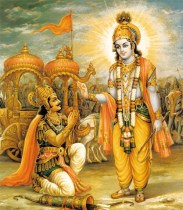
bhagavad-gita 

निर्भय व निश्चिन्त हो (Be fearless Nothing to worry)

   था नहीं कदाचित ऐसा मैं तुम सब नृपगण नहिं रहे कहीं|

                 होगा भी न ऐसा इससे आगे, भविष्य में      हम रहें नहीं||2-12||

    जीवात्मा के हित शरीर में ज्यों किशोर, यौवन, बृद्धापन|

              वैसे ही अन्य देह प्राप्ति फिर धीर पुरुष क्यों मोहे मन ||2-13||


व्यथित न हो सम रहो (Remain calm and composed)

        शीत-ताप सुख-दुःख, तो विषयों से इन्द्रिय स्पर्श के कारण |

                  आना जाना है क्षण-भंगुर  अर्जुन! सहना, उचित निवारण ||2-14||

        पुरुष-श्रेष्ठ! विषयों से इन्द्रिय स्पर्श, न जिनको करें ब्यथित |

                          सम होजाते  सुख-दुःख में सदैव वह योग्य निरंतर अमृत हित ||2-15||

सत्यं शिवम् सुन्दरम (Truth prevails)       

        जो सत्य वही अस्तित्व में भी, है असत्य का अस्तित्व नहीं|

                              दोनों का    तत्वदर्शियों के  द्वारा        परखा     निष्कर्ष यही ||2-16 ||

           जिससे है सारा जगत व्याप्त,       आत्मा को अविनाशी जानो|

                           इस नाश-रहित के विनाश को,     है समर्थ कोई     मत मानो||2-17 ||


            सफलता हित संघर्ष करो (Struggle for success)

           अविनाशी, नित्य, व अप्रमेय,   जीवात्मा का ही तो यह तन |

                           है नाशवान,     अब   इसीलिये उठ युद्ध करो तुम हे अर्जुन ||2-18||

    इस आत्मा को जो मरने, और मारने वाला  मान रहे  |

                     यह कभी न मरती, और मारती, दोनों सत्य न जान रहे||2-19||

Krishna addressed these words to sorrowing Arjun, as if laughing at him, in the midst of two armies.(2-10)

O Arjuna! You grieve over those who should not be grieved for and yet speak like learned. Wise men do not think and grieve for that were in past or for that yet to come. It means wise men always try to be in present only, and take further action according to that only.(2-11) .

In fact there was never a time when I was not, or when you or these kings were not there. Nor is it a fact that hence after we shall all cease to be. Lord Krishna speaks about the continuity of the soul. (2-12).

The embodied body (Jivatma) passes through the stages childhoodhood, youth, old age attributed to the soul (Jivatma) through this body.The same way it attains another body. So also there is no interruption by death in the continuity of the soul and after death is yet another stage where he enters another body. The men having patience are not at all distressed about it. (2-13).

Happiness, sorrow, heat, cold – these are experienced when sense-organs come in contact with objects of respective sense organs. Since this contact has a beginning as well as an end, these experiences are not everlasting. None of these will stay forever, therefore endure them courageously.  One must face them bravely without getting either attached or dejected to these temporary experiences (2-14).

O personage Arjuna! the person of patience to whom pains and pleasure are alike and who is not tormented by these contacts of sense organs with the respective objects, become eligible for immortality. (2-15).

The unreal has no existence, and the real never ceases to be. Evil is unreal. This phenomenal world of names and forms is ever changing. Hence it is also of unreal nature. ‘The real,’ that is, the self, can never cease to be. Non-existence is the real nature of the body which is in itself insentient, ever-changing and perishable. Existence (i.e., imperishableness) is the real nature of the self, which is sentient.  (2-16).

Know that which pervades the entire body is indestructible ‘Atma’. No one is able to destroy the imperishable soul (2-17)

 Know that alone to be imperishable which pervades to this universe; for no one has power to destroy this indestructible substance. Therefore, O Great Indian Arjun! fight this battle (2-18).

One who considers this soul to be capable of killing and he who takes as killed, both are ignorant. The soul neither kills, nor is killed (2-19)


LEARNINGS:

Krishna explained Arjuna the knowledge of right values of life. He started to define from what a normal person generally thinks and what is the reality to clarify his misconception.  It cleared his delusion and set his thinking right. He directs Arjuna to rise over his weaker emotion and fulfill his obligation as a warrior.

The Gita is the world’s foremost school of self-management and enables us to be successful and happy. A few points of learning from these shlokas of Gita are as follows:

  • Be in present: Intelligent persons never worry about things happened in the past or likely to occur in future. One has to learn to be happy now in the present; This is smart living. One has to bring in the power of `being’ and not get lost to the power of `becoming’. Mind is just a flow of thoughts. Thoughts, most of the time, prevent you from experiencing the moment. What appears as thinking is nothing but an association of past thoughts, and foolish projections into the future with some hope of peace or fear of uncertain imagination. Life’s existence or the root is in the present, and not in flying with the thoughts of the past or imagining an illusory future.
  • Be fearless: We all are everlasting soul. Nobody can make any harm to it. So there is nothing to be scared of.
  • Evil has no absolute existence of its own: The Bhagavad Gita says: “The good will never perish; evil can never exist”. Evil doesn’t exist as a separate entity; it is only an appearance. As such, it has only a relative, not absolute, existence. Just as darkness does not have an existence; it is not an entity or a substance but only a lack of light. In the same way, evil is simply lack of goodness.

Gita discards a separate existence for evil and considers evil to be only a relative viewpoint. For example, poison is generally considered to be bad; but it is also good in a certain context: many lifesaving drugs are poisons. Likewise, vitamins may be good, even lifesaving; but consumed in excess they can be fatal.

Therefore, good and evil are only relative. All is an appearance, including evil. And the enormous positive energy generated in you can make you go beyond evil and see the truth as ‘advaita’, as the one non-dual reality.

  • Gita’s concepts have been scientifically proven: Today the scientists also knows there is nothing absolutely good or evil in existence. Everything is relative. Whether it is a poisonous metal such as mercury or lead, or a vitamin, the scientist does not assign any predetermined moral value to it. He just knows them as they are; that they are useful in different places for different purposes. Usage alone makes something good or bad. Therefore, Gita’s approach to evil, as well as its concept of divinity, is consistent with scientific thought.
  • Struggle for success: Self (soul) can never be killed. So, nothing to worry. Struggle for success.

——————————————

GITA-GEET Chapter 2 (1-9) गीता-गीत द्वितीय-अध्याय श्लोक(1-9)

GEETA-GEET (गीता -गीत )

                                                       GITA-GEET Chapter 2 (1-9)

गीता-गीत  द्वितीय-अध्याय श्लोक(1-9)

कृष्ण-अर्जुन संवाद

(Talk between Krishna and Arjuna)

अर्जुन की दशा

करुणा से व्याप्त व अश्रुपूर्ण आकुल नेत्रों को देखा जब|

      उस शोकयुक्त-के-प्रति वचनों को बोलउठे मधुसूदन तब ||2-1||

श्री कृष्ण का उद्बोधन

  असमय में कैसे मोह और आसक्ति ग्रसित हो अर्जुन तुम |

                   सत्पुरुषों के उपयुक्त नहीं, नहिं स्वर्गप्रदा, हो कीर्ति भी कम ||2-2||

        मत बनो नपुंसक अर्जुन तुम यह उचित तुम्हारे लिए नहीं |

                   क्षुद्रता हृदय की दुर्बलता को त्याग उठो ! रिपुदमन  यहीं ||2-3||

अर्जुन की सोच

          गुरु-द्रोण पितामह-भीष्म के-प्रति कैसे धनु-बाण करूंगा मैं  |

                  मधुसूदन! ये सब पूजनीय नहिं उनसे युद्ध  लडूंगा मैं  ||2-4||

          गुरु महानुभावों का वधकर तो भोग से भिक्षा है बेहतर  |

                       धन-कामयुक्त-गुरुजन वध से भोगेंगे भोग रुधिर रंगकर ||2-5||

      है श्रेष्ठ क्या रण यह ज्ञात नहीं, हारेंगे या जय पायेंगे |

                     धृतराष्ट्र-पुत्र सब खड़े हैं वे,  जिन्हें मार न जीना चाहेंगे ||2-6||

               प्रवृत्ति कृपणता-दोष से विकृत , चित्त धर्म हित  मोहित है|

                          शिष्य हूँ शरण, शिक्षा दो, मेरे हित जो श्रेयस्कर निश्चित है||2-7||

             पा निष्कंटक संपन्न राज्य, देवों के भी अधिपति बन हम|

                          देखते  नहीं ऐसा उपाय इन्द्रिय-शोषक दुःख  कर दे कम ||2-8||

                 कहकर ऐसे श्रीकृष्ण के प्रति निद्राजित-अर्जुन फिर बोले |

                           ‘गोविन्द करूंगा नहीं युद्ध’ कह शांत होगये नहिं डोले ||2-9||

Madhusoodan Shri Krishna addressed To Arjun, who was overwhelmed with pity, with eyes filled with tears due to sorrow.(2-1) Arjuna! how has this infatuation overtaken you at this odd hour? It does not suit to noble souls, neither will it bring heaven, nor fame to you (2-2). Arjun! Do not yield to unmanliness. This is not appropriate for you. You are known for putting enemy in trouble by your strong hit. Stand up! shaking off  inferiority and weak-heartedness.(2-3)

Arjuna asked, “Madhusoodan Krishna! How shall I fight with fight with Bhishma who is my grand-father and Dronacharya who is my Guru? They both are worthy of deepest reverence.”(2-4). ” I consider it to be better to live on begging than slaying these noble elders. After all by killing our elders and teachers, I will enjoy only bloodstained pleasures.(2-5)”. ” “We do not know what will be better for us to fight or not to fight. Whether we will win or they will conquer us. Those very sons of Dhritarashtra are standing as enemy in the battlefield, after killing whom, we do not wish to live.”(2-6)

With my nature overpowered by weak sympathy and pity, I am confused about my duty and have lost all composure because of weakness. In this condition I am asking You to tell me clearly what is best for me. Now I am Your disciple, and a soul surrendered unto You. Please instruct me (2-7). Even on obtaining undisputed sovereignty and an affluent kingdom on this earth and lordship over gods, I do not see any means that can drive away the grief which is drying up my senses.(2-8).  Having spoken thus to Shri Krishna, Arjuna again said to him. “I will not fight” and become silent.(2-9).

LEARNINGS FROM GITA

The Gita was given to the skilled and noble Arjuna when he became despondent on the battlefield at Kurukshetra, unable to withstand the challenge of having to fight his own relatives, teachers and friends. The great warrior Arjuna was overwhelmed by his emotions. Completely deluded, he lost his intellect. He could not carry out his obligatory duty as a warrior. He laid down his bow and arrow and refused to fight a righteous war.

Arjuna faced the dilemma in the battlefield whether to fight or run away from war for the sake of peace. Arjuna’s dilemma was the biggest of all. He had to make a choice between fighting the war and killing his most revered guru, very dear friends, close relatives, and many innocent warriors or running away from the battlefield for the sake of preserving the peace and nonviolence. Arjuna’s dilemma is, in reality, the universal dilemma. Every human being faces dilemmas, big and small, in their everyday life when performing their duties. In such situations one should keep in mind that-

‘The mind tricks you, distracts you and eventually destroys you. It is the intellect that keeps you on course.’

So one should –

  1. Do Objective observation: Just as Arjuna observes the battlefield and readies himself for war, each person responsible for taking decision, must objectively observe the path he should take. He must pre-view his aides, enemies and his own positive and negative tendencies.
  2. . Be aware of your strength and weakness: One must become aware of the power of the negative forces, most predominantly his attachment, and gain the strength to facilitate his progress on the assigned path. The spectre of a fearsome battle between the humane and divine attributes, and the inhuman and demonical tendencies, looms ahead.

The aspirant, who seeks to get success, must perceive both these within himself with absolute clarity and integrity, thus reducing his chances of an internal trauma such as Arjuna faced when he cried out to Lord Krishna, “My Gandiva (bow) is dropping from my hands! My skin is burning and my mind is reeling! I can stand no more!”

*GITA BY RAMA (राम-गीता सन्देश)* SUCCESS MANTRAS FOR LIFE (सफल जीवन-रथ के अंग)

*GITA BY RAMA (राम-गीता सन्देश)*

SUCCESS MANTRAS FOR LIFE (सफल जीवन-रथ के अंग)

As lord Krishna gave message of Gita to Arjuna motivating him to fight in Mahabharat  war and win. In the same way during the war in Lanka Rama Ravana battle, lord Rama delivered the message of Gita to Vibhishana.

Vibhishana saw that Rama was going to fight on foot with Ravana who is fully equipped with armor and chariot. He became anxious when he saw Ravan on a magical chariot, but Lord Rama, who was having a good combat with him, was chariot-less. He said, “You have no chariot nor any protection either for Your body (in the shape of armour) or for Your feet (in the shape of shoes). How, then, can You expect to conquer this mighty hero, Ravana.

Rama replied that the chariot which leads one to victory is quite another. Lord Rama explained to Vibhishana the way how a person can win the success in life. As per Tulasidasa’s Ramayana (RamaCharit Manas) in Lanka kaand, Rama defined the winning chariot as follows:

सुनहु सखा कह कृपानिधाना। जेहिं जय होइ सो स्यंदन आना॥

सौरज धीरज तेहि रथ चाका। सत्य सील दृढ़ ध्वजा पताका॥

बल बिबेक दम परहित घोरे। छमा कृपा समता रजु जोरे॥

ईस भजनु सारथी सुजाना। बिरति चर्म संतोष कृपाना॥

दान परसु बुधि सक्ति प्रचंड़ा। बर बिग्यान कठिन कोदंडा॥

अमल अचल मन त्रोन समाना। सम जम नियम सिलीमुख नाना॥

कवच अभेद बिप्र गुर पूजा। एहि सम बिजय उपाय न दूजा॥

सखा धर्ममय अस रथ जाकें। जीतन कहँ न कतहुँ रिपु ताकें॥

Rama, the sea of mercy, heard Vibhishana and said: “Listen friend, the chariot that leads a man to victory is another. Further he explained different components of the chariot and implements used to be successful in life-battle..

  • Wheels of that chariot – 1. Valour and 2. Fortitude
  • Banner and standard – Truthfulness and 2. Good conduct.
  • Four horses: 1. Strength, 2. Discretion, 3. Self-control and 4. Benevolence
  • Cords joining horses to the chariot – Forgiveness, compassion and                                                                                                     evenness of mind.
  • Expert driver: Adoration of God
  • Shield – Dispassion,
  • Sword – Contentment
  • Axe – Charity,
  • Fierce lance – Reasoning and intellect
  • Relentless bow- Highest wisdom,
  • Container holding arrows – A pure and steady mind
  • Sheaf of arrows – Quietude and the various forms of abstinence (Yamas) and religious observances (Niyamas)
  • Armor – Homage to the teachers, learned people, and elders;

There is no other equipment and implement for victory as efficacious as this. My friend, he who owns such a chariot to ride on, shall have no enemy to conquer anywhere.

युगादि नवदुर्गा पर गीता सन्देश YUGADI NAVA DURGA AND GITA

युगादि नवदुर्गा पर गीता सन्देश

YUGADI NAVA DURGA AND GITA

The word Ugadi (युगादि) is derived from the two words ‘Yuga’ and ‘Adi’. Yuga (in sansakriti) means the period or era and Aadi(in sansakriti) means the beginning. Uga उग also means commencement of germination. So this is the  day when creation had started in the universe. Ugadi is assumed as the day, the Creator (Lord Brahma ब्रम्ह प्रजापति) had commenced the creation. To commemorate the commencement of Creation, this day is celebrated as Ugadi.

The universe is created from the Energy which pervades everywhere and had existed on its own all along throughout a timeless eternity in one or other form of the energy. Supreme Energy that is being recognized as the Super power or Supreme God/ Goddess. Adishakti (आदि शक्ति) is the name given as per Indian mythology. Adishakti created three types of forces in the form of Trinity of great Gods. The Trinity of great Gods Shiva, Brahma and Vishnu are the forms of universal forces: Nuclear forces, Gravitational forces, and Electro-magnetic forces respectively.

Other gods (Devas) are divine powers within this material universe or nature. They represent spirits behind specific posts in the affairs of running the world of nature; such as Agni Dev (the god of fire), Vayu Dev (the god of the wind), Varuṇa Dev (the god of the ocean), Indra Dev (the king of the celestial gods), etc.

As administrators of various processes of the universe, these gods provide us with rain, wind, crops, vegetation, minerals, fertile soil, etc. We human beings are indebted to them for all that we receive from them. These gods perform their duty, and expect us to perform our duty in the proper consciousness too. They become pleased when someone performs a sacrifice for whole, and in turn assist by creating favorable material conditions. Thus, it is said that when we strongly resolve to serve God, the universe begins to cooperate with us.

We humans are the only ones in this chain who have been bestowed with the ability to choose our actions by our own free will. We can thus either contribute to the harmony of the cycle. When the majority of the people of human society accept their responsibility to live as integral parts of the universal system, material prosperity abounds

Twice in a year such conditions prevail in Nature that indicate the major changes in the environment around us; one is when the winter approaches and the other when the summer approaches. In Sanskrit fortress is called DURG, That is why these two periods have been termed as NAV DURGA also. It signifies that we should renew our body system (DURGA) by detoxifying by keeping fast, purifying the environment by HAVAN or YAGYA.

At Yugadi, summer season approches. During this month after sun-set, we can visualise the constellation “Simha” (Leo) {सिंह-राशि} and later Kanya कन्या-राशि (Virgo) on the horizon as ascendants. Hence we can visualises the image  as a “a young woman sitting on lion”. This is the image of Goddess Durga (देवी दुर्गा). That is why nine days from yugadi are called NAVA DURGA (नव दुर्गा) also.

In the third chapter of  Bhagvad Gita, importance of  Yagya (Act of contributing for the society as a whole) on Yugadi has been explained.

              सहयज्ञाः प्रजाः सृष्टा पुरोवाचप्रजापतिः ।

                           अनेन प्रसविष्यध्वमेष वोऽस्त्विष्टकामधुक्‌॥3-10॥

At YUGADI, the beginning of creation, The Creator (Prajapati Brahma) shaped spirit of yagya along with mankind and said: “By this yagya may you prosper and multiply! May this yagya yield the  enjoyment you seek and fulfill you and your coveted desires.”

देवान्भावयतानेन ते देवा भावयन्तु वः ।

          परस्परं भावयन्तः श्रेयः परमवाप्स्यथ ॥3-11॥

And may you cherish gods by yagya and may gods foster you, for this is the means by which you will finally achieve the ultimate state. Nourish the Devas through this yagya and may those Gods nourish you. Thus through mutual satiation, both shall attain the highest good.

These Shlokas have been written in the form of Hindi poems in GITA-GEET.

गीता-गीत

रच कर यज्ञ, मनुज युगादि में देते ब्रम्हा ज्ञान |

समष्टि हेतु आहुति व्यष्टि की दैवी यज्ञ विधान ||

यही यज्ञ मानव समाज के विकास हित सोपान |

            अभिलाषा  सब  करे पूर्ण प्रारम्भ करो  निर्मान ||॥3-10॥

भाव लोकहित  में देने को, देव-भाव ही जान |

देव भाव की उन्नति से हो देवों का सम्मान ||

प्रकृति रहे संतुलित देव-उन्नति की यह पहचान |

             पारस्परिक उन्नति से हो देव, मनुज  कल्यान ||॥3-11॥

Also we need to get rid of all the negative feelings and emotions. Our nervous system needs to be strengthened by performing a specific meditation (SADHANA) each night of NAVRATRI in the manner specified for that (NAV DURGA) day in order to rejuvenate our mind and nerves in order to make our body capable to fight disease and get success in life. These celebrations motivate us to contribute for the society as a whole as we are enjoying today the fruits of the actions earlier performed by the society only.

GITA-GEET Chapter 1 (30-47) गीता-गीत प्रथम-अध्याय श्लोक(30-47)

गीता-गीत 

GITA-GEET Chapter 1 (30-47)

गीता-गीत  प्रथम-अध्याय श्लोक(30-47)

मोह (Illusion)

देखता विपरीत ही सब  लक्षणो को  अब यहाँ |

            मार रण में स्वजन को कल्याण हो सकता कहाँ ||31||

विजय की न चाह कृष्ण! न राज्य-सुख की कामना|

            राज्य, जीवन, भोग को अब किस प्रयोजन चाहना ||32||

चाह जिनके लिए होती राज्य, धन, सुख-भोग की|

               खड़े रण में त्याग धन और चाह प्राण-के-मोह की|| 33||

आसक्ति (Attachment)

सभी गुरुजन पितृतुल्य श्वसुर पितामह पुत्र भी|

         पौत्र साले और मामा आदि  संबंधी सभी ||34||

  मैं नहीं चाहता करना वध, वे मुझे चाहे मार लें|

                 भूभाग क्या! त्रैलोक्य का ही राज्य भी चाहे मिले||35||

मारकर धृतराष्ट्र-पुत्रों को भला क्या पाऊंगा |

            आततायी-इन्हें वध, मैं पाप ही कर जाऊंगा ||36||

हैं बंधु ही धृतराष्ट्र-पुत्र, न मारने के योग्य हैं|

             मार स्वजनों को क्या, ये सभी सुख भोग्य हैं||37||

अन्धविश्वास (Superstition)

कुलनाश-से-कृत-दोष को व मित्र-द्रोह के पाप को|

 भृष्ट चित्त ये लोभ से नहिं देखते संताप को ||38||

कुलनाश-से-कृत-दोष को हे कृष्ण! हमसब जानते|

    फिर भी इस पाप से हटने को क्यों नहिं मानते ||39||

कुल का जब नाश हो तो नष्ट हो कुल-धर्म भी |

  कुल-धर्म जब नहीं रहा, तो बढेगा  अधर्म भी ||40||

दुश्चिन्तन (Anxiety disorder)

अधर्म  के बढ़ने से कुल की स्त्रियाँ दूषित बनें |

          स्त्रियाँ दूषित हों तो फिर वर्णसंकर  को जनें ||41||

    कुल और कुलघातियों हित वर्णसंकर नरक पथ|

              श्राद्ध-तर्पण के बिना, पितरों के लिए पतन-रथ||42||

   वर्णसंकरकारक  कुलघातियों के दोष  सब |

             नष्ट-करते पारंपरिक-जाति व कुलधर्म अब ||43||

     होचुका कुलधर्म जिनका नष्ट ऐसे मनुज भी|

                 सुनते अनिश्चित कालतक वास करते नरक भी||44||

      जानकर भी हाय!  हम तत्पर  महापाप करने|

                 राज्य-सुख के लोभ से अपनों के प्राण हरने||45||

        सामना किये बिना सशस्त्र यदि धृतराष्ट्रपुत्र|

                  हितकर ही होगा, मारें रण में मुझे निशस्त्र ||46||

          शोक से उद्विग्न मन, धनुष बाण छोड़कर |

                    पीछे रथ के बैठ गए, पार्थ ऐसे बोल कर ||47||

Feeling guilty and shifting responsibility

Arjuna said to Shri Krishna, ” Keshava! I see omens of evil, and do not see any good in killing my kinsmen in battle.”(31) He further said, ” I do not covet victory , nor kingdom or luxuries or even life being to us.(32)Those very persons for whose sake we desire the kingdom, luxuries and pleasures -teachers, uncles, sons, grand uncles, maternal uncles, father-in-law, grand-nephews, brothers-in-law and other relations – are there arrayed on the battle field staking their lives and wealth.”(33-34) “I do not wish to kill them even for the sake of the Kingship of the three worlds (35)”.

“What will I get by killing them? Sin will surely accrue to us (36). Sons of Dhritarashtra are my cousins. How can we be happy after killing our own kinsmen (37).”

“Even though, these people, with their mind captured by greed, perceive no evil in destroying their own race and no sin in treason to friends (38), why should not we who  see the sin accruing from destruction of one’s family, think of desisting from committing this sin(39). It is a great sin to kill my teachers and relatives. Family traditions will perish with the destruction of family. When family virtues are lost, vice takes hold of the entire race (40)”.

With the preponderance of vice, the women of the family will become corrupt. With the corruption of women, there ensues an intermixture of castes (41). Owing to promiscuity (indiscriminate mingling) progeny damns the race itself as the family culture and values   (such as paying regards to their ancestors) would no more be there (42). Through these evils of intermixture, the age-long racial traditions and family customs will vanish (43). Arjun further said, “we hear that men who have lost their family traditions, dwell in hell for an indefinite period of time” (44). ” What a pity! we are aware of all this, even then we have set our mind to commit this great sin and due to lust for throne and enjoyment we are prepared to kill our own kinsmen(45). It would be better for me if the sons of Dhritarashtra, armed with weapons, kill me in battle, while I am unarmed and unresisting.(46).After speaking thus, He threw away his bow and arrows and sank down on the seat of the chariot. Arjuna was overwhelmed with grief.  (47). 

Learnings from Gita:

Gita is the teachings of Krishna imparted to Arjuna when he lost his nerve on the battlefield at Kurukshetra when he found himself facing his own kin. Arjuna’s dilemma is, in reality, the universal dilemma. Every human being faces dilemmas, big and small, in their everyday life when performing their duties.

  1. Anxiety disorder: Arjun was suffering with anxiety disorder in which one starts feeling intense fear of a specific object or situation. The fear goes beyond what’s appropriate and may cause excessive, unrealistic worry and tension with little or no reason.
  2. Emotional warning sign: All guilt is an emotional warning sign. It robs us of vitality , health and the peace of mind. Guilt upon conscience is like rust upon iron -guilt consumes the guilty . Sometimes guilt-prone people carry a strong sense of responsibility to others, and that responsibility makes other people see them as leaders. If guilt is suppressed, it may result in laziness, suspicion and frustration. The worst thing one can do when feeling guilty is to do nothing or abandon one’s duty.
  3. Chronic guilt affects mental health adversely . If guilt is suppressed, it may result in laziness, suspicion and frustration. Scriptures recommend confession and atonement to overcome guilt. How can you rejoice when constantly feeling guilty and condemning yourself ?
  4. Guilty person is always scared:Conversely , guilt might not be always a negative emotion. Feelings of guilt may signal leadership potential; guilt-prone people carry a strong sense of responsibility to others, and that responsibility makes other people see them as leaders.

The worst thing one can do when feeling guilty is to do nothing or abandon one’s duty as Arjuna contemplated. He feels guilty about his decision to fight against his own kinsmen and becomes despondent. Krishna convinces him that his guilt feeling is inappropriate.

GITA-GEET Chapter 1 (verses 20-30) गीता-गीत प्रथम-अध्याय श्लोक(20-30)

*At the occasion of Makar Sankranti (मकर संक्रांति पर)*

GITA-GEET Chapter 1 (verses 20-30)

गीता-गीत  प्रथम-अध्याय श्लोक(20-30)

कपिध्वज अर्जुन देख शस्त्र-संधान-प्रवृत कुरुपुत्र सभी |

          बोले सेना-मध्य स्थापित कर दो रथ श्री कृष्ण! अभी ||20-21||

जिससे मैं कर सकूं निरीक्षण कौन समर मे स्थित हैं |

            कौन युद्ध-के-योग्य मेरे-संग रण-हित यहाँ उपस्थित हैं ||22||

देख सकूं दुर्बुद्ध दुर्योधन प्रिय-हित जो होगये भ्रमित |

            कौन कौन आगये यहाँ पर होने इस रण में सम्मलित ||23||

अर्जुन के कहने पर, रथ दोनों सेनाओं  मध्य लिया |

            भीष्म-द्रोण-प्रमुख-योद्धाओं के सन्मुख जा खड़ाकिया ||24||

और कहा, अर्जुन! देखो रण हित कौरव-जन जुटे हुए |

            देख लिया  अर्जुन ने  दादा, गुरु, परदादा डटे हुए   ||25-26||

मामा, भाई, पुत्र, पौत्र, मित्रों,श्वसुरों सुहृदों में सब |

            बोले शोकाकुल हो अर्जुन दोनों ओर ही हैं बांधव ||26-27||

अर्जुन अवसाद में (Arjuna in Depression)

कृष्ण! देख स्वजनोंको उपस्थित युद्धहेतु रणस्थल में| 

   शिथिल हो रहे अंग सभी सूखा जाता मुख पल पल में||28||

अंग अंग सब कांप रहे अब रोम रोम भय-रोमांचित  |

            फिसलरहा गांडीव हाथ से त्वचा जलन से हुई व्यथित||29-30||

पाता नहीं समर्थ स्वयं को, रह लूं इसी अवस्था में|

    भ्रमित हो रहा सभी तरफ, मैं  डूब रहा मनोव्यथा में||30||

After the death of king Paandu the Paandavs became the lawful king. Since they were still in their childhood. Dhritaraashtra was made king and Bheesma was taking care five sons of Pandu and 100 sons Dhritarashtra. Also he took responsibility of protecting the kingdom as a supreme commander of the army.. Duryodhana was a very jealous person. He also wanted the kingdom. The kingdom was divided into two halves between the Paandavs and the Kauravs . Duryodhana was not satisfied with his share of the kingdom. He wanted the entire kingdom for himself. He unsuccessfully planned several foul plays to kill the Paandavs and take away their kingdom. He even ordered to disrobe Pandavas wife Queen Draupadi in front of King’s court. He unlawfully took possession of the entire kingdom of the Paandavs.

He refused to give back even five villages without a war. All mediation by Lord Krishna and others failed. The big war of Mahaabhaarata was thus inevitable. The Paandavs had only two choices: Fight for their right as a matter of duty or run away from war and accept defeat in the name of peace and nonviolence.

Before the start of the Mahabharat battle, Arjuna, one of the five Paandava brothers, wanted to be in the mid of battlefield to enable him to see the warriors of both the sides (20-21). He wanted to see specially the persons who wanted to fight on behalf of evil minded Duryodhan (22-23). Krishna took the magnificent chariot between the two armies  just in front of Bhishma, Drona and other warriors and said, “Arjun ! behold these Kauravas assembled here.. As soon as Arjuna enters into the mid of battlefield, he saw all his kinsmen, sons, brothers-in-law, cousins, grand-father and uncles, maternal uncle, teachers (Bhishma, Drona and others) standing arrayed in battle Seeing all the relations present there, Arjuna was overcome with deep compassion and spoke in sorrow to Lord Krishna (24-27), “My limbs fail and my mouth is parched, my body quivers and my hairs stand on end. The bow Gandiva slips from my hand and my skin too burns all over” (28-29). He feels guilty about his decision to fight against his own kinsmen and becomes despondent and under psychological depression(30).

Arjuna, , faced the dilemma in the battlefield whether to fight or run away from war for the sake of peace. He had to make a choice between fighting the war and killing his most revered guru, very dear friends, close relatives, and many innocent warriors or running away from the battlefield for the sake of preserving the peace and nonviolence.

Arjuna’s dilemma is, in reality, the universal dilemma. Every human being faces dilemmas, big and small, in their everyday life when performing their duties. These shlokas of first chapter of Gita depict how negative thoughts develop due to dilemmas  that leads to depression and how a depressed person becomes physically weak and inactive. Gita is the teachings, of Lord Krishna, imparted to Arjuna when he lost his nerve on the battlefield at Kurukshetra when he found himself facing his own kin.

GITA- GEET Chapter 1 (1-19) गीता-गीत प्रथम-अध्याय श्लोक 1-19

On the occasion of GITA JAYANTI First 19 shlokas of Gita is being translated in poems in Hindi ( गीता-गीत) with learnings in english.


  गीता-गीत

GITA- GEET Chapter 1 (1-19)

गीता-गीत प्रथम-अध्याय श्लोक १-१९

धर्मक्षेत्र कुरुक्षेत्र में पहुंचे युद्धोन्मुख कौरव संतान |

पांडुपुत्र निजपुत्र कर रहे क्या, पूछें धृतराष्ट्र महान ||

         संजय तब वर्णन करते गुरु  द्रोण दुर्योधन का संवाद |

              कौनकौन योद्धा उत्सुक उनकेहित ले मन रणउन्माद ||

          देखो गुरु! पांडव  सेना यह  धृष्टद्युम्न से निर्देशित |

              भीमार्जुनद्रुपदविराटशैब्य अभिमन्युद्रौपदीसुतों सहित ||

               पुरुजितउत्तमौजाचेकितान सब कुन्तिभोज से महारथी |

                हैं काशीराज अरु युधामन्यु भी रणबांकुरे व वीरब्रती ||

अपने दलबलसंग सबकरें यहां युधिष्ठिरकागुणगान |

धर्मक्षेत्र कुरुक्षेत्र में पहुंचे युद्धोन्मुख कौरव संतान ||

       अब मेरे दल के भी विशेष योद्धाओं को गुरुवर जानो |

          गुरु आप पितामह भीष्म कर्ण अश्वत्थामा को पहचानो ||

          यह सौमदत्तसुत भूरिश्रवा गुरु कृपाचार्य हैं सदाजयी |

             मेरेहित जीवनमोह त्याग रणमें विकर्ण होने विजयी ||

       वीर विविधआयुध से युक्त हैं युद्धकलामें पारंगत |

               भीष्मरक्षित सेनादल निजरिपु को कर सकती आहत ||

भीम रक्षित सेना में बल अपर्याप्त जयहित आसान |

धर्मक्षेत्र कुरुक्षेत्र में पहुंचे युद्धोन्मुख कौरव संतान

                           अपने अपने मोर्चे पर होजाएँ सभी सज्जित होकर |

                                    सभी ओर से रहें पितामह-भीष्म की रक्षाहित डटकर ||

                                    सिंहनाद कर उठे पितामह हर्षित कर दुर्योधन को |

                                शंख बजाया वीर प्रतापी ने सबके उद्बोधन  को ||

                           ढोल मृदंग नगारे शंख बजे भयकारी ध्वनि करते |

                                  श्वेत-अश्वयुत महान-रथ में अर्जुन कृष्ण दिखे बढ़ते ||

                     बजा उठे देवदत्त धनंजय, पांचजन्य श्रीकृष्ण महान|

                     धर्मक्षेत्र कुरुक्षेत्र में पहुंचे युद्धोन्मुख कौरव संतान||

                                        पौण्ड्र भीम महराज युधिष्ठिर अनन्तविजय ले करते घोष|

                                             मणिपुष्पक सहदेव बजाते नकुल लिये कर शङ्ख सुघोष ||

                                    काशिराज से परम् धनुर्धर और शिखण्डी महारथी |

                                       धृष्टद्युम्न विराट सात्यिकी अपराजित और वीरव्रती||

                                         सौभद्र द्रुपद द्रौपदीपुत्र सब भूपति फिर लगे बजाने |

                                          अपने अपने शंख, प्रतिध्वनि से भू नभ  गुंजाने  ||

                     धृतराष्ट्र-सुतों के ह्रदय विदीर्णहुए सुन रणभेरी-की-तान

                     धर्मक्षेत्र कुरुक्षेत्र में पहुंचे युद्धोन्मुख कौरव संतान||

Gita starts with the question from Dhritarastra (King of Hastinapur), that gathered on the holy land of Kuruksetra, eager to fight, what did his sons and the sons of Pandu do. Then Sanjay (his close associate and charioteer) started narrating what was going on there.

Duryodhan had gone to his Guru Dronacharya  and asked him to look toward the mighty army of the sons of Pandu arrayed for battle by his (Dronacharya’s) talented pupil, Dhristadyumna, son of Drupada. He explained about the warriors on both the sides and concluded that his own army, protected by Bhisma was unconquerable, while the army of sons of Pandu, guarded by Bhima was easy to conquer. Therefore, stationed at their respective positions on all fronts, all were required to guard Bhishma in particular on all sides. On this,  Bhishma, cheering up Duryodhana, roared terribly like a lion and blew his conch. After that all blew their own individual conches indicating the preparedness for the battle.


Learnings:

  1. This part of the first chapter of Gita shows that Duryodhan was more concerned about himself and his victory and not about others. He was not able to see the challenges being faced by him in the correct perspective. It shows a mind not governed by the intellect is dangerous. It distracts, tricks and misleads you.
  • You may underestimate the challenge posed at you and reach to the inappropriate conclusion.
  • This will lead you to start following the wrong strategy.
  • Success can never be achieved unless you focus properly and analyse the environment in the correct perspective before reaching to a conclusion and decide to act. }


  1. Lord Krishna blew conch (Panch janya) and Arjun blew conch Deva-datta. This means Lord Krishna prepares to motivate all the five senses (GYANENDRIYAS). Arjuna prepares to surrender himself to the Lord (Dev-datta). One could be motivated for the actions approprite to the situations only if one surrenders and listen carefully to the Lord.