GITA Chapter 2 (62-72) गीता द्वितीय-अध्याय श्लोक(62-72) स्थितप्रज्ञ की विधि – ‘इन्द्रिय-निग्रह’ (Technique to achieve stability of mind – ‘Control of senses’)

GITA Chapter 2 (62-72)

गीता द्वितीय-अध्याय श्लोक(62-72)

स्थितप्रज्ञ की विधि – ‘इन्द्रिय-निग्रह’

 (Technique to achieve stability of mind – ‘Control of senses’)

ध्यायतो विषयान्पुंसः संगस्तेषूपजायते ।

         संगात्संजायते कामः कामात्क्रोधोऽभिजायते ॥2-62

हो जिस विषय पर ध्यान, उससे ही तो हो आसक्ति |

          पूरी न हो यदि कामना, फिर  क्रोध की उत्पत्ति ||2-62||

क्रोधाद्‍भवति सम्मोहः सम्मोहात्स्मृतिविभ्रमः ।

स्मृतिभ्रंशाद् बुद्धिनाशो बुद्धिनाशात्प्रणश्यति ॥2-63

क्रोध से सम्मोह, फिर हो भ्रमित, शक्ति स्मरण की |

                नाश हो बुद्धि का, भ्रष्ट स्मृति से, गति हो मरण की||2-63||

रागद्वेषवियुक्तैस्तु विषयानिन्द्रियैश्चरन्‌ ।

         आत्मवश्यैर्विधेयात्मा प्रसादमधिगच्छति ॥2-64

  राग-द्वेष रहित विषय में इन्द्रियों का हो भ्रमण|

                  आत्म-वस मन शांत कर दे, स्वनियंत्रित आचरण||2-64||

प्रसादे सर्वदुःखानां हानिरस्योपजायते ।

              प्रसन्नचेतसो ह्याशु बुद्धिः पर्यवतिष्ठते ॥2-65

ऐसी प्रशन्नता से ही सब दुखों का अभाव हो|

           प्रशन्नचित्त में ही स्थिर बुद्धि का प्रभाव हो||2-65||

नास्ति बुद्धिरयुक्तस्य न चायुक्तस्य भावना ।

न चाभावयतः शान्तिरशान्तस्य कुतः सुखम्‌ ॥66

बुद्धियोग बिना    न निश्चय-बुद्धि,    न ही भावना|

                    भावना-बिन हो न शान्ति, अशान्त बिन-सुखकामना||2-66||     

इन्द्रियाणां हि चरतां यन्मनोऽनुविधीयते ।

तदस्य हरति प्रज्ञां वायुर्नावमिवाम्भसि ॥2-67

इन्द्रियों में जिस किसी के संग करता मन रमण |

               वही करती, वायु जल में नाव सम, बुद्धि-हरण ||2-67||

तस्माद्यस्य महाबाहो निगृहीतानि सर्वशः ।

               इन्द्रियाणीन्द्रियार्थेभ्यस्तस्य प्रज्ञा प्रतिष्ठिता ॥2-68

अतः विषयों से पृथक हो, इन्द्रिय नियंत्रित रहें|

                   जिसकी सब प्रकार, बुद्धि उसकी प्रतिष्ठित कहें ||2-68||

या निशा सर्वभूतानां तस्यां जागर्ति संयमी ।

      यस्यां जाग्रति भूतानि सा निशा पश्यतो मुनेः ॥२-69

संयमी जिस ज्ञान में रहते हैं जागृत,

उससे अनजान दुनिया रात मान सोती

सभी-प्राणी भौतिक सुखों के हित जागते,

            मुनियों की दृष्टि में वह रात ही होती ||2-69||

आपूर्यमाणमचलप्रतिष्ठं-

समुद्रमापः प्रविशन्ति यद्वत्‌ ।

तद्वत्कामा यं प्रविशन्ति सर्वे

        स शान्तिमाप्नोति न कामकामी ॥२-70

सब तरफ़ से जल समुद्र में समा जाते,

जलधि  परिपूर्ण प्रतिष्ठित रहते अचल|

उसी तरह भोग-कामना से शान्ति नहीं,

                 शान्ति वहीं, भोगों से भी रहें अविचल||2-70||

विहाय कामान्यः सर्वान्पुमांश्चरति निःस्पृहः ।

निर्ममो निरहंकारः स शान्तिमधिगच्छति ॥२-71

छोड़ सब कामनाएं बिना आकान्क्षाएं जो विचरता|

            निर्मम अहंकार रहित हो, वह शान्ति प्राप्त करता ||2-71||

एषा ब्राह्मी स्थितिः पार्थ नैनां प्राप्य विमुह्यति ।

    स्थित्वास्यामन्तकालेऽपि ब्रह्मनिर्वाणमृच्छति ॥2-72

अर्जुन! यही है आध्यात्मिक स्थिति

न हो मोहित कभी भी इसमें जा कर

ब्रम्हनिर्वाण पद  को  प्राप्त करता

                 अंत समय भी इस-स्थिति को पाकर||2-72||

Those whose attention is  always about sensual objects, get attached to those objects. Attachment arouses desires and when one does not get what one desires, irritation is aroused, and from irritation stems anger and frustration. (2-62)

From anger, stems delusion (false beliefs or assumptions); delusion causes loss of one’s confused mind; the confused mind makes a person lose his/her ability to reason and lose their power to solve his/her problems. When one loses his/her power to reason, the person will suffer ultimate death and destruction. (2-63)

But the disciplined wise man (Karmayogi) who has control over his senses, enjoys all the sense-objects but remains free from attraction and emotional distractions. Such a person  gains peace and purity of the self. (2-64)

One who can control his senses by practicing the regulated principles of freedom from attachment, attains purity of self and gets rid of all miseries and grief. A person with internal purity soon develops steady wisdom and a clear, unclouded intelligence. (2-65).

One who cannot control his senses is the one who is lacking in steady wisdom and intelligence, and also lacks proper feelings or sentiments (thoughts). A person who cannot think properly and make decisions with a clear mind, cannot have peace of mind, and without peace of mind there can be no happiness. (2-66)

The mind of those who run after or pursue material pleasures and sensual objects, is often clouded and let on the wrong path. His attached mind will distract the intellect in the direction of the sensual pleasure, just as the wind blows away the boat floating on the water. (2-67)

Therefore with senses under control and distracted from sensual objects, one does  have the ability to reason out properly. He also gains peace of mind leading to eternal bliss and happiness. (2-68)

When it is night for all others, i.e. when all beings are not able to see the reality (out of ignorance they are not awakened),the wise man is always awake (spiritually). When others are involved in the sensual pleasure, and deceived (deluded) by sensual objects i.e. when all being are awake in the world of desires, the wise man who knows the truth and has realized God, shuts his eyes to daylight and the misleading material objects that attract other people, and considers it night. He is not easily deceived. (2-69)

As the river enters the ocean without affecting the ocean or disturbing it, so the desires enter the person who has obtained Supreme peace and does not disturb him, but not the person who is already filled with desires and wants more and more. Wiseman becomes the ocean itself, undisturbed by the rivers of information flowing into him from all sides. (2-70)

By giving up all desires, freeing oneself of all attachments and without constantly thinking of oneself or of one’s possessions, only then, one may live in realistic peace. (2-71)

O ARJUNA, this is the state of a person who has truly realized God. After obtaining Supreme Bliss by realizing God, this person cannot be deceived by any of life’s evils. Until the time of death one remains firm in this state and ultimately achieves Supreme Peace and tranquillity. (2-72)

 LEARNING:

  1.    One may enjoy all worldly pleasure but without being attached. One becomes       emotionally attached, if he pays undue attention with the sensual pleasure. Don’t pay attention to sense objects. Never under-estimate the strength of ‘kam, krodh. Lobh, moh and ahankar’- lust, anger, greed, excessive attachment and ego- which are enemies that must be vanquished in order to advance towards our goal.
  2. Biology tells us that your emotions are chemicals, and these chemicals are released by the brain. We control these chemicals. However, over time, these chemicals can change you and control you. The emotions not only rewire your brain, but they also rewire your body. The cells lose the capacity to absorb nutrients. They grow less and they rejuvenate less. Thus, your entire cellular and DNA structure can be changed by your behaviour.
  3. It is the attachment that create desire; and if the desire is not fulfilled, anger overpowers him.
  4. In the state of anger, you are literally poisoning your system. It can be verified by your blood test. Your system turns toxic. Your very chemistry is altered.
  5. Individuals who had trouble controlling expressions of anger were four times likelier to need more than four days for their wounds to heal, compared with counterparts who could master their anger.
  6. Anger increases blood pressure, heart beat rates and adrenalin levels.
  7. Experts say it’s because anger triggers an excessive release of stress hormones, increased oxygen demand by the heart’s muscle cells and causes platelets (which are the blood cells that form clots) to get sticky causing blockage and a heart attack.
  8. Try to be a Man-of-Steady-Wisdom: Characteristics of a person with steady wisdom (stable mind) are as follows:
  • Sthithprajana person speaks the truth yet does not hurt anyone’s feelings; that he does not bring an illusory pleasure through flattery.
  • The stithaprajna is stable: he is not prey to random gusts of passion but sticks to righteous behaviour, having overcome all desires.
  • At the same time, he does not surrender himself to inertia or inactivity but throws himself into action;
  • he is not driven by the psychological burden of the goal, but rather by the imperative of effort.
  • Since he is nishkama, without desire, he is neither shattered by failure nor elated by success.
  • To him, victory and defeat, pleasure and pain, honour and dishonour, friend and enemy are all alike -he judges himself, not by the fickle opinions of others, but by whether or not he has fulfilled his dharma, the ethical path that he has laid down for himself.

The Lord also indicates to Arjuna the practical method, by which he should struggle hard, in order to reach the eminence of perfection as a Man-of-Steady-Wisdom.

We come across some loss in life; whether it is loss of a relationship, material possession, societal status, job opportunity , or a project, it is ignorance to slip into remorse or come up with bargaining measures to undo the loss. Our pain is not real but emanates from our attachment to ego and its inconsequential desires.

  1. When desires are getting fulfilled and our ego is feeling great, there is elation, and
  2. when it turns the other way , there is deep depression.

Our simplistic solution to this complex problem is not to seek to fulfill our desires and pamper our ego which gives all the power to loss because we cannot deal with non-fulfillment of desire.

When you pay attention to fulfill your desire, there will always be unhappiness. If we get what we desire, there is craving for more and if desires are unfulfilled, it leads to anger and frustration. Anger give rise to delusion, delusion to confusion of memory and confusion of memory to loss of intellect.

When intellect is lost, beings form perishes. The eternal self then leaves the body with senses and mind and goes to a new one. One who steadies his intellect will not perish or change the body. He will become non perishable being and may dwell in the same body

If we cultivate mindfulness towards non-fulfillment of desire, the curse of loss turns into a boon of transcendence.

Once we capitalize on this enlightened attitude to give up obsessive desire for gratification and possession, loss becomes a trivial incident rather than a life-defining negative experience.

With practice, the consequent mental state reflects the abode of eternal peace. Then, when confronted with life’s circumstances ­ whether positive or negative ­ we experience neither exultation nor depression but remain balanced and detached.
GITA-GEET गीता-गीत GITA Chapter 2 (54-61) गीता द्वितीय-अध्याय श्लोक(54-61)

GITA-GEET गीता-गीत

GITA Chapter 2 (54-61) गीता द्वितीय-अध्याय श्लोक(54-61)

स्थित प्रज्ञ (PERSON OF STABLE MIND)

अर्जुन का प्रश्न

स्थितप्रज्ञस्य का भाषा समाधिस्थस्य केशव ।

            स्थितधीः किं प्रभाषेत किमासीत व्रजेत किम्‌ ॥2-54

स्थिरबुद्धि समाधिस्थ के क्या लक्षण, कहते हैं  |

              केशव!  कैसे बोलते,  बैठते,  कैसे वे  चलते हैं ||२-54||

कृष्ण-वचन

प्रजहाति यदा कामान्‌ सर्वान्पार्थ मनोगतान्‌ ।

आत्मयेवात्मना तुष्टः स्थितप्रज्ञस्तदोच्यते ॥2-55

मन में आई सब कामनाएं त्याग, सदा  रहते हैं |

                  अपने में संतुष्ट, जो स्थिर बुद्धि उन्हें कहते हैं ||2-55|| 

दुःखेष्वनुद्विग्नमनाः सुखेषु विगतस्पृहः ।

          वीतरागभयक्रोधः स्थितधीर्मुनिरुच्यते ॥2-56

दुःख में मन उद्विग्न नहीं, न सुख में कोई चाहत |

             स्थिर बुद्धि वही जिसको, भय राग क्रोध से राहत ||2-56||

यः सर्वत्रानभिस्नेहस्तत्तत्प्राप्य शुभाशुभम्‌ ।

    नाभिनंदति न द्वेष्टि तस्य प्रज्ञा प्रतिष्ठिता ॥2-57

सभी जगह स्नेहयुक्त हों शुभ हो या फिर अशुभ रहे |

               न अभिनन्दन न द्वेष करें, उसको ही स्थिर बुद्धि कहें||2-57||

यदा संहरते चायं कूर्मोऽङ्गनीव सर्वशः ।

             इन्द्रियाणीन्द्रियार्थेभ्यस्तस्य प्रज्ञा प्रतिष्ठिता ॥2-58

कछुआ समस्त अंग समेट, पीठ की ढाल बना रहता |

              विषयों-से-समेट इन्द्रियों को स्थिर-बुद्धि वही करता ||2-58||

विषया विनिवर्तन्ते निराहारस्य देहिनः ।

      रसवर्जं रसोऽप्यस्य परं दृष्टवा निवर्तते ॥59

 जो न विषय भोगे, उसको विषयों से तो निवृत्ति मिले |

                   परम-तत्व को देख, विषय के रस से भी आसक्ति हिले||2-59||

यततो ह्यपि कौन्तेय पुरुषस्य विपश्चितः ।

        इन्द्रियाणि प्रमाथीनि हरन्ति प्रसभं मनः ॥60

रह जाए आसक्ति, इन्द्रिय-विषय-रस से कुछ क्षण भी |

                   संयमी-पुरुष की बलवती इन्द्रियाँ बलात् हरलेती मन भी||2-60|| 

तानि सर्वाणि संयम्य युक्त आसीत मत्परः ।

          वशे हि यस्येन्द्रियाणि तस्य प्रज्ञा प्रतिष्ठिता ॥2-61

संयम में रख इन्द्रियों को, ध्यान में स्थित रहें|

                 इन्द्रियाँ वश में हों, उसकी बुद्धि को स्थिर कहें||2-61||

Arjuna asked: Krishna, What is the sign of the man having stable  mind and established in Samadhi (perfect tranquility of mind) ? whose intelligence is firmly fixed in wisdom?  How does the man of stable mind speak, how does he sit, how does he walk?. (2-54)

 He whose mind is undisturbed, is said to have steady wisdom if he completely frees himself from desires of the mind. The yogi of stable mind gives up all cravings of the mind, withdrawn and satisfied in himself (2.55).

He is not afraid of adversity, nor does he crave for happiness. He whose mind is unaffected by misery or pleasure and is free from all bonds and attachments, fear and anger, is man, of steady wisdom and decisive intellect. (2-56)

A man has a decisive intellect, who is no longer attached to anything, showing pleasure if something pleasant happens and displeasure if something unpleasant occurs. (2-57)

Just as a tortoise withdraws or retreats its limbs into its shell, a person with a firm mind and decisive intellect can withdraw his senses from sensual objects. (2-58)

One who does not use his senses for the enjoyment of sensual objects can overcome and rise above sensual objects. However, he is not able to leave off the attachment to his senses. One who realizes God or the Supreme, gets rid of attachments to the senses as well. (2-59)

Even those who are wise and are striving to achieve spiritual happiness and freedom are carried away violently or with great force by their excited senses. (2-60)

A perfect-Master is one who has complete control over his sense-appetites. They have complete control of their senses and therefore they have also earned the power of constant wisdom. Their minds are constantly focused and concentrated on meditation. the Supreme Goal.(2-61)

LEARNING ABOUT MAN-OF-STEADY-WISDOM

Krishna discusses the characteristics of the stitha-prajna, the person of stable temper.

  • Stable temper (Stitha-prajana) person’s conversation is joy to the ears; that he speaks the truth yet does not hurt anyone’s feelings. The stithaprajna is stable: he is not prey to random gusts of passion but sticks to righteous behavior, having overcome all desires.
  • At the same time, he does not surrender himself to inertia or inactivity but throws himself into action;
  • he is not driven by the psychological burden of the goal, but rather by the imperative of effort.
  • Since he is without desire, he is neither shattered by failure nor elated by success.
  • To him, victory and defeat, pleasure and pain, honour and dishonour, friend and enemy are all alike -he judges himself, not by the fickle opinions of others, but by whether or not he has fulfilled his dharma, the ethical path that he has laid down for himself.

The Gita says that happiness runs away from one who desires it; happiness runs after him, who wants nothing.

Gita-Geet गीता-गीत GITA Chapter 2 (47-53) गीता द्वितीय-अध्याय श्लोक(47-53)

Gita-Geet गीता-गीत

GITA Chapter 2 (47-53) गीता द्वितीय-अध्याय श्लोक(47-53)

बुद्धियोग से कर्मयोग तक

कर्मण्येवाधिकारस्ते मा फलेषु कदाचन ।

            मा कर्मफलहेतुर्भूर्मा ते सङ्गोऽस्त्वकर्मणि ॥2-47

 अधिकार तेरा कर्म में ही तो है केवल,

कर्म के फल में, न कोई बस है कभी|

अतः न रहो कर्म-फल के हेतु हो कर,

                 और आसक्ति अ-कर्म में न हो अभी||2-47||

योगस्थः कुरु कर्माणि सङ्गं त्यक्त्वा धनंजय ।

         सिद्ध्यसिद्ध्योः समो भूत्वा समत्वं योग उच्यते ॥2-48

कर कर्म अपना, सदा योग में स्थित,

तजकर आसक्ति, सुनो धनंजय! अब|

सिद्धि असिद्धि में होगे समान जब

              कहलायगा यह ही समत्व योग तब||2-48||

दूरेण ह्यवरं कर्म बुद्धियोगाद्धनंजय ।

          बुद्धौ शरणमन्विच्छ कृपणाः फलहेतवः ॥2-49

अर्जुन! बुद्धि-योग से, सकाम कर्म हीन है|

                 बुद्धि के ही शरण हो, फ़ल-हेतु कृपण दीन है||2-49||

बुद्धियुक्तो जहातीह उभे सुकृतदुष्कृते ।

              तस्माद्योगाय युज्यस्व योगः कर्मसु कौशलम्॥2-50

त्याग दो सत्कर्म दुष्कर्म की सोच,

बुद्धि युक्त हो कर्म में लगो अब|

ऐसे बुद्धि योग से जुड़ोगे जब भी ,

                  योग से कर्मों में निपुण होगे तब||2-50||

कर्मजं बुद्धियुक्ता हि फलं त्यक्त्वा मनीषिणः।

        जन्मबन्धविनिर्मुक्ताः पदं गच्छन्त्यनामयम् ॥2-51

बुद्धि से युक्त होकर ही मनीषी सब,

कर्म से उत्पन्न हुए फल को छोड़ देते|

ऐसे जन्म-बंधन से मुक्त हो स्वयं को,

                  निर्विकार परमपद से स्वतः जोड़  लेते ||2-51||

यदा ते मोहकलिलं बुद्धिर्व्यतितरिष्यति।

           तदा गन्तासि निर्वेदं श्रोतव्यस्य श्रुतस्य च॥2-52

मोह से कलुषित मन महा-सागर को,

 बुद्धि पूर्णरूप से पार कर जाए जब|

सुने हुए, सुनने-शेष, सब कर्मभोगों से,

                         उदासीन हो मन वैराग्य पा जाए तब||2-52||

श्रुतिविप्रतिपन्ना ते यदा स्थास्यति निश्चला।

       समाधावचला बुद्धिस्तदा योगमवाप्स्यसि ॥२- ५३॥

भिन्न-विचारों से विचलित चित,

जब एक जगह स्थिर हो जाये

होती अचल समाधि में बुद्धि,

                    योग की प्राप्ति तब ही हो पाए ||2-53||

To perform action is only your right but you have no right in its result. Do not be attached to inaction, nor be instrumental in making your action bear fruit.(2-47)

Perform action, being steadfast in Yoga abandoning attachment and remain balanced in success and failure. Evenness of mind is Yoga” Becoming calm and balanced in both success and failure of an action while performing. It is called EQUANIMITY or SAMATVA YOG. (2-48).

Budhi-yoga  i.e. joining with intellect during action is always better than performing with selfish motive. So don’t be poor by becoming instrumental in making actions bear fruit (2-49)

The person with intellect (BUDDHIYOGI) sheds both the so called good and bad activities, rather analyze all the activities and find out the required and undesirable elements of the same. Then engage self for yoga with the addition of required activities by replacing undesirable elements. Performing with intellect (BuddhiYog) gives skill in performance. (2-50)

Because, those who are devoted to wisdom, (they) becoming men of Enlightenment by giving up the fruits produced by actions, reach the state beyond evils by having become freed from the bondage of birth.(2-51)

When you finally reach the state where your mind is free from all attachments and pleasures in life, your intellect will clear and will give you the ability to think logically, and wisely, whenever you need to (2-52)

The moment your intelligence which is bewildered by the various interpretations of the vedas (scriptures)Shruti, shall stand unmoving and stable in the Supreme Consciousness , then you will assimilate in him. (2-53)

LEARNINGS ABOUT KARMAYOGA IN MANAGEMENT

Process of action is being explained from the point of view of intellect. When the action is guided by the intellect, it is called Buddhi-Yoga that leads to KARMAYOGA. Equipped with this attitude of mind, one will be able to throw off completely the shackles of action (KARMA).

Law of Karma :You have the right only to perform your actions, duties and responsibilities in life; however, the results of these actions should not concern you at all. You should not even desire results for your actions because:


  • Creativity and enthusiasm can spring only when you are well rested; and you cannot rest if you are anxious about the outcome of your actions.
  • When we perform an action with an eye on the end result, we get lost in the end and don’t enjoy the means of getting to the end.
  • When we perform some actions as an expression of joy and do not bother about the result, the action itself brings fulfilment.


The results are simply not in your hands. There are several other attributes for the results to follow. It does not mean that you refrain from action. Don’t be attached to inaction Both managers and karmayogi are expected to remain steadfast in situations both favourable and unfavourable. Lord Krishna advises,  “Being steadfast in yoga, perform actions, abandoning attachment, remaining unconcerned as regards success and failure. This evenness of mind is known as yoga.

When one is acting with full awareness, applying brain with all the alertness and intellect, then the  doer is fully sure that there is no other better option left and he will not care for the results, so it will not bind him.

There are several other attributes for the results to follow.

  • A manager is required to use authority. But unless authority is combined with dispassion, the result can be contrary to expectation.
  • Use of higher consciousness in dealing with people is sure to result in better motivation and loyalty among stakeholders.
  • As per principle of Karmaayoga, every individual, by nature, wants to do good work but unsuitable conditioning may prevent him in doing so. Commitment in the true sense can only be inspired for a cause bigger and better than self.

Management is an intuitive art of relating yourself with various stakeholders in a company such as staff, customers, suppliers, etc. Gita contains management wisdom, particularly those that have a bearing on the often tricky relationship between individual’s aspiration and career achievements and his organization’s growth. For an individual looking to contribute to corporation, one should be a Satvik performer.

Manager is required to have qualities of a good leader –ability to construct a creative vision and capacity to have trusting relationship with large number of people with whose help this vision will be fulfilled. A manager with clarity of personal goals and calmness of mind can only be an able manager.

Man is the first part of the word ‘manager’, indicating the need for man management as the most crucial part of the management.

Both managers and karmayogi are expected to remain steadfast in situations both favorable and unfavorable. Lord Krishna advises,  “Being steadfast in yoga, perform actions, abandoning attachment, remaining unconcerned as regards success and failure. The evenness of mind is known as yoga.

Becoming calm and balanced in both success and failure of an action while performing is called EQUANIMITY or SAMATVA YOG. So while doing your duties, always be in this yoga relinquishing all the attachments. Action attains its value and power by the inner attitude.When actions are performed by a person for any selfish motive or gain, that person shall always suffer and remain disappointed in life. Those, however, who practice KARMYOGA  or the Yoga of even-mindedness, are free from any worries or disappointments for they do not care for the results of their actions and duties.

 गीता- गीत  GITA Chapter 2 (39-46) गीता द्वितीय-अध्याय श्लोक(39-46)

On the auspicious occasion of Diwali before starting worshiping Goddess Laxmi, pray God of Intellect Lord Ganesh. For that enjoy the message from GITA on how to connect intellect  (Buddhi Yoga)

दीवाली के शुभ अवसर पर लक्ष्मी-पूजन के पूर्व बुद्धि-प्रदाता गणेश जी की वन्दना हेतु

बुद्धि-योग पर गीता का सन्देश

 गीता- गीत 

GITA Chapter 2 (39-46) गीता द्वितीय-अध्याय श्लोक(39-46)

बुद्धि-योग   

एषा तेभिहिता साङ्ख्ये  बुद्धिर्योगे त्विमां शृणु

     बुद्ध्या युक्तो यया पार्थ कर्म बन्धन प्रहास्यसि||2-३९||

यह अबतक है कहा गया वह सांख्य-योग में,

सुनो! इसे मुझसे अर्जुन! अब बुद्धि-योग में|

बुद्धियुक्त होकर जब भी तुम कर्म करोगे,

          उन  कर्मों के बंधन में फिर नहीं बंधोगे ||2-39||

O Arjuna! this intellectual wisdom has been explained as given in  ‘Saankhya-yoga’ – now listen the same in relation to Buddhi-Yoga; possessed of such an intellect you will be freed from the bondage of karma. (2-39)

नेहाभिक्रमनाशोऽस्ति प्रत्यवायो न विद्यते ।

            स्वल्पमप्यस्य धर्मस्य त्रायते महतो भयात् ॥२- ४०॥

आरंभिक प्रयत्न का इसमें नाश न होता,

किये गए परिणाम का कोई ह्रास न होता|

थोड़ा भी इस धर्मकेपथ पर यदि बढ़जाएँ,

     बड़े से बड़े भय का भी आभास   होता ||2-40||

Any effort made towards the realization of this act of intellect, is never wasted; nor can it yield negative fruit. In this path there is no loss of effort.  Even the slightest usage of this intellect in performing the action, helps one to transcend the greatest fear.(2-40)

When action is performed without worrying for the results, there will be no loss of effort as no energy is wasted in worrying. There is no fear of contrary results when even smallest  action of assigned duty is performed and this will lead to excellence in performance. Fear of failure seemed to be paralysing the men in blue. So one should simply focus on performing their tasks to best of their ability.

व्यवसायात्मिका बुद्धिरेकेह कुरुनन्दन ।

बहुशाखा ह्यनन्ताश्च बुद्धयोऽव्यवसायिनाम्||2-४१||

व्यवसायात्मिका बुद्धि एक निश्चयात्मक रहती|

             अव्यवसायीबुद्धि अनंत बहुत शाखाएं  रखती ||2-41||

When a person has his goal fixed and determined to achieve it, his intellect will direct him towards the unidirectional path. It means there will be only one line of thinking and so one intellect. But when the goal is not fixed, the doer does not know where he wants to reach, he will remain thinking in multi-direction because he will be tempted by the different desires and start wandering in different directions. (2-41)

यामिमां पुष्पितां वाचं प्रवदन्त्यविपश्चितः ।

वेदवादरताः पार्थ नान्यदस्तीति वादिनः ॥२- ४२॥

कामात्मानः स्वर्गपरा जन्मकर्मफलप्रदाम् ।

क्रियाविशेषबहुलां भोगैश्वर्यगतिं प्रति ॥२- ४३॥


इन्द्रियों-की-तृप्ति हेतु, भोग व ऐश्वर्य हेतु,

जन्म कर्म फ़ल हेतु कर्मकाण्ड जो दिये|

 वेद-शब्दों से लेकर  कहें वही  मोहक वचन

         स्वर्ग से परे न कुछ, प्राप्ति करने के लिए||2-42,43||

O Arjuna! Unenlightened people with multiple desires who quote Vedic doctrines and whose sole aim is paradise (swarg), who proclaim that ‘nothing else exists’, they perform varied actions which are for the fulfilment of desires and cravings and which bear the fruit of rebirth. They indulge in sweet and meaningless talk.(2-42,43)

भोगैश्वर्यप्रसक्तानां तयापहृतचेतसाम् ।

      व्यवसायात्मिका बुद्धिः समाधौ न विधीयते ॥२- ४४॥


भोग व ऐश्वर्य में जो भी रहें सदा लिप्त,

हो सदा उसमें ही जिनका आसक्त-चित्त|

ऐसे लोगों की भी व्यवसायात्मिका बुद्धि,

           हो न कभी स्थिर समाधि में पाने को सिद्धि||2-44||


Those who are full of worldly desires, are not able to see any thing beyond heaven. They always utter  flowery speech quoting religious scriptures recommending many rituals. As per them if you perform certain rituals, you will enjoy heavenly pleasure in return as their fruit afterward in the heaven, or in the next birth. Those whose minds are carried away by such words, and who are deeply attached to pleasures and worldly power, cannot attain the determinate intellect while concentrating on their goal.

If a doer or manager is very much attached to pleasure and other worldly wealth and power, then his intellect will not be able to concentrate to attain his target. So always proceed to action in an unattached manner otherwise it will be difficult to achieve the goal even though you have a predetermined goal. A person with a high degree of concentration has his senses controlled and focused to a great degree. An unorganised person lacks the necessary concentration for order. A physically ordered state can be transformed to a disordered state if the cause for order is weakened. (2-44)


त्रैगुण्यविषया वेदा निस्त्रैगुण्यो भवार्जुन ।

                     निर्द्वन्द्वो नित्यसत्त्वस्थो निर्योगक्षेम आत्मवान् ॥२- ४५॥


त्रिगुणमयी विषयों का केवल,  वेद करें प्रतिपादन|

अर्जुन! त्रिगुणात्मक-साधन को तुम न करो संपादन||

धैर्यवान अविचलित, सुख-दुःख द्वंद्व  रहित,

     न खोजो योग-क्षेम, हो सदा आत्मबल सहित||2-45||

The Vedas deal with the evolutes of the three gunas. O Arjuna! Rise above the three gunas and duality! Be steadfast in Truth and unconcerned about the preservation or fulfilment of wants and desires; abide in the Self.(2-45)


यावानर्थ उदपाने सर्वतः संप्लुतोदके ।

                   तावान्सर्वेषु वेदेषु ब्राह्मणस्य विजानतः॥२- ४६॥


जब जल से परिपूर्ण जलाशय, अपने पास,

लघु जल भंडारों की, फिर क्यों होगी आश|

वैसे ही जब ब्रम्ह-तत्त्व का प्राप्त हो ज्ञान ,

          त्रिगुणी विषयों हित वेदों का नहीं चाहिए ध्यान||2-46||

The wise sage who has realised the Atma, has as much utility for the Vedas, as one has for a small reservoir in a place that is surrounded by water.(2-46)

LEARNING

Buddhiyoga is the practice of uniting the mind with the higher consciousness through the proper use of buddhi, the power of discretion and understanding. Through Buddhiyoga we learn to control the senses and quiet the mind.

“Buddhi” is the intelligence that exists in all of us. This is the part of the mind which is self-aware.  It is the force behind our wisdom and our reactions to the outside world. A man of lesser buddhi is constantly driven by the senses and the desire for sense objects. He thereby remains in a constant state of turmoil and sorrow arising out of union and disunion with the sense objects.

Buddhi gives us the power to discriminate the right from the wrong and the appropriate from the inappropriate.

Our minds remain mostly disturbed and preoccupied with one problem or the other. According to the Bhagavad-Gita, equanimity of mind should be cultivated by practicing control of the mind, the body and the senses through inner discipline and detachment.

Dis-interested action through “vyavasayatmika buddhi (cultivated mind) is the aim of buddhi-yoga.

SCIENTIFIC SIGNIFICANCE OF NAV-DURGA CELEBRATION

*SCIENTIFIC SIGNIFICANCE OF NAV-DURGA CELEBRATION*

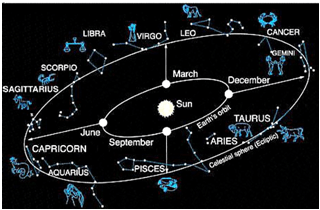
Axis of the Earth is inclined at 23.5 degree from the axis of its orbit in which it revolves around the Sun. Thus astronomically, earth undergoes two major sun operations in a year. Seasons are dependent on the direction of the relative movement of the sun.

  1. When the sun appears to move southward of the equator (Dahshinayana), intensity of the sun is not harsh during this period, and the environment is full of moisture. This signifies the onset of winters.
  2. When the sun appears to move northward. In this period the sun rays are more intense and the environment is more of a dry kind. This signifies the coming of summers

Thus two times, the two seasons summer and winter combine. The first union of two seasons comes in March end to mid April (CHITRA SHUKLA PRATIPADA TO NAVAMI as per Hindu calendar) and second one comes in September  end/anywhere in October month (ASHWIN SHUKLA PRATIPADA TO NAVAMI as per Hindu calendar). These nine days/nights are called NAVRATRI.

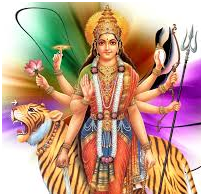
As Earth orbits the sun, the sun appears to pass in front of different constellations. The signs are derived from the constellations that mark out the path on which the sun appears to travel over the course of a year. During Navratri (around October), winter season approches; and before sun-rise, we can visualise the constellation “Simha” (Leo) {सिंह-राशि} and later Kanya कन्या-राशि (Virgo) on the horizon as ascendants. Hence we can visualises the image  as a “a young woman sitting on lion”. This is the image of Goddess Durga (देवी दुर्गा). Durga ji is generally depicted as a woman standing atop or riding a  lion, which represents power, will, and determination. The lion is a symbol of uncontrolled animalistic tendencies such as anger, arrogance, selfishness, greed, jealousy, desire to harm others etc. The image of  Durga on lion reminds us to have a control on these tendencies and protect your mind from vitiating from these evil tendencies.

zodiacDurga

The Sanskrit word Durga (दुर्ग) means fort or a place that is protected and thus difficult to reach. It is derived from the roots ‘dur (दुर्)‘ (difficult) and ‘gam (गम)‘ (pass, go through). In Sanskrit fortress is called DURG, That is why these two periods have been termed as NAV DURGA also. Thus DURGA refers to a fortress that we build to protect ourselves from marauders. Thus, Durga  is the psychological fortress of our body and mind that we build by making a system leading life and get them audited regularly by regulating your life style.

Because of the begining of the change of season, during these periods human body becomes more prone to diseases as it is less resistant, both physically and mentally to the attack of outside environment, micro organism, bacteria and viruses. Remedial measures to combat the possible disease is the deep significance in celebrating the NAVRATRI. Our body acts as a fortress  for us; and body’s immune system is the army that  defends our body-systems from the outside environment and foreign bodies such as micro organism, bacteria and viruses. According to Ayurveda, fasting enegises the digestive fire. An increase in the digestive fire burns the toxins in the body. When the toxins are flushed out of the body, it loses dullness and lethargy. It helps in de-stressing and building up immunity. All the cells of the body are rejuvenated. Fasting, therefore, is an effective therapy to cleanse our body.

NavDurga signifies that we should renew our body system (DURGA) by detoxifying through keeping fast, purifying the environment by HAVAN or YAGYA. Also we need to get rid of all the negative feelings and emotions. Our nervous system needs to be strengthened by performing a specific meditation (SADHANA) and prayer each night of NAVRATRI in the manner specified for that (NAV DURGA) day in order to rejuvenate our mind and nerves in order to make our body capable to fight disease and get success in life. Thus, there are three rituals that are followed during Nav-Durga days in order to stregthen our own two fortress (Durga दुर्ग) body and mind:

  1. Fasting
  2. Yagya
  3. Prayer and Celebration

When the body is cleansed, the mind becomes calmer and more peaceful and alert because of the deep connection between the body and mind. Fasting is combined with prayer all over the world and in all religions, because when you are fasting, you are detoxified, and your prayer becomes authentic and deep.

Yagya and Havan purifies the environment from bacterias and viruses that may cause

diseases.

Prayer and celebrations for that fill us with the positive energythat strengthen our nervous system.

Goddess Durga symbolizes the divine forces (positive energy) known as divine shakti (feminine energy/ power) that is used against the negative forces (negative energy and vices—arrogance, jealousy, prejudice, hatred, anger, greed and selfishness) of evil and wickedness. Shakti  means power, the resort of all transformative energy. She is Chit-Shakti, the power of consciousness, out of which the cosmos coalesces as matter, life and mind.

गीता-गीत GITA-GEET गीता चतुर्थ अध्याय श्लोक (1-9) Gita-Chapter 4 Verses (1-9)

गीता-गीत GITA-GEET

गीता चतुर्थ अध्याय श्लोक (1-9) Gita-Chapter 4 Verses (1-9)

अवतार रहस्य (SECRET OF INCARNATION)

श्री भगवानुवाच

इमं विवस्वते योगं प्रोक्तवानहमव्ययम्‌ ।

विवस्वान्मनवे प्राह मनुरिक्ष्वाकवेऽब्रवीत्‌ ॥1॥

        विवस्वान को कहा था मैंने, यह योग सनातन महान

           मनु ने विवस्वान से, मनु से इक्ष्वाकु ने पाया ज्ञान॥4-1॥

Lord Krishna said that he taught Vivasvan Soorya,

the eternal science of right action,

Vivasvan told the same to Manu, the father of mankind

and Manu conveyed it to Ikshvaku, his son. (4-1)

एवं परम्पराप्राप्तमिमं राजर्षयो विदुः ।

स कालेनेह महता योगो नष्टः परन्तप ॥2॥

                                        ऐसे परम्परा से प्राप्त, राजर्षियों ने जाना यह ज्ञान |

                                        कालांतर से लुप्त हो गया, हे अर्जुन! यह योग महान ||4-2||

This supreme science of yoga was thus received through the chain of disciple succession, and the saintly kings understood it in that way. But in course of time the succession was broken, and therefore the science as it appears to be lost. (4-2)

स एवायं मया तेऽद्य योगः प्रोक्तः पुरातनः ।

भक्तोऽसि मे सखा चेति रहस्यं ह्येतदुत्तमम्‌ ॥3॥

मेरे द्वारा आज कहा गया यह वह योग पुरातनतम |

    तुम हो मेरे भक्त व सखा निश्चय यह रहस्य उत्तम॥4-3॥

That very ancient science of the relationship with the Supreme is today told by Me to you because you are My devotee as well as My friend; therefore, you can understand the transcendental mystery of this science. (4-3)

अर्जुन उवाच

अपरं भवतो जन्म परं जन्म विवस्वतः ।

      कथमेतद्विजानीयां त्वमादौ प्रोक्तवानिति ॥4॥

आप तो इस समय जन्मे, विवस्वान का जन्म पुराना |

         मैं कैसे यह समझ लूं, उन्होंनें आरम्भ में तुमसे जाना||4-4||

Arjun said that Vivasvan Surya was born  earlier so is much senior

How can I agree that you instructed him, as by birth you are much junior (4-4)

श्रीभगवानुवाच

बहूनि मे व्यतीतानि जन्मानि तव चार्जुन ।

      तान्यहं वेद सर्वाणि न त्वं वेत्थ परन्तप ॥5॥

बहुत से जन्म हो चुके हैं, सुनो हे अर्जुन मेरे तुम्हारे |

              तुम्हें नहीं कुछ ज्ञात अर्जुन!, किन्तु जानता हूँ मैं सारे||4-5||

Because of past actions, you have no intuitional knowledge. The eye of wisdom is not opened, power of vision is not present. So, you do not know your previous births. But I know them.

अजोऽपि सन्नव्ययात्मा भूतानामीश्वरोऽपि सन्‌ ।

प्रकृतिं स्वामधिष्ठाय सम्भवाम्यात्ममायया ॥6॥

अजन्मा भी होते हुए, अविनाशी आत्मा,

समस्त प्राणियों का भी  होकर परमात्मा|

स्वयं को अपनी प्रकृति में अधिष्ठित कर,

      आत्म-माया से  जन्म लूं ,बन जीवात्मा ||4-6||

Being birth-less; un-decaying by nature

As the Lord of all existences, I take their care

Yet subjugating My Prakriti, consisting of the three gunas,

As though born, embodied through my Maya, I appear

यदा यदा हि धर्मस्य ग्लानिर्भवति भारत ।

      अभ्युत्थानमधर्मस्य तदात्मानं सृजाम्यहम्‌ ॥7॥

जब जब धर्म का होता है ह्रास |

अर्जुन! अधर्म का होता विकास ||

तब तब सृजन करता मैं स्वयं को|

             शरीर के संग करने भू-पर निवास||4-7||

O! son of Bharat! whenever on earth righteousness becomes less

I create Myself in suitable body form, when there is exaltation of unrighteousness.

krishna in mahabharat

परित्राणाय साधूनां विनाशाय च दुष्कृताम्‌ ।

    धर्मसंस्थापनार्थाय सम्भवामि युगे युगे ॥8॥

भक्तों का करने उद्धार,  दुष्टों का करने संहार|

            धर्मपुनर्स्थापन के हित युग युग में लेता अवतार||4-8||

For the protection of  saints, and the evil-doers’ destruction,

To re-establish righteousness, in every era, I come as incarnation.

जन्म कर्म च मे दिव्यमेवं यो वेत्ति तत्वतः ।

     त्यक्तवा देहं पुनर्जन्म नैति मामेति सोऽर्जुन ॥9॥

जन्म और कर्म मेरे होते सभी दिव्य,

तत्व से ऐसा जो व्यक्ति जान-जाता |

त्याग कर देह न पुनर्जन्म पाता फिर,

              वह हे अर्जुन! सीधे मुझको पा  जाता ||4-9||

One who knows Arjun! that My birth and deeds are divine.

After leaving body, he is not born again but attains place of mine.


LEARNING

Birth of Divine Power: For the sake of firmly establishing righteousness, Supreme Power takes birth in every age. Whenever virtue subsides and immorality prevails, the Supreme divine power comes on the earth to guide human-being. As Lord Krishna was born five thousand years ago, Jesus Christ also took birth more than two thousand years ago to establish a new religion Christianity to show us the path of compassion and love. Needs of people vary with the time according to the environment prevailing at that time. Accordingly, Divine persons take action to improve the condition of human-being and guide them accordingly.

Both Super soul (God) and souls are ‘unborn’ in the sense that they are not created by anyone but are evolved by the nature with the help of consciousness from the Supreme conscious energy.

  1.  Souls are born in the sense that they take birth due to past ‘karma’.
  2. The Super-soul (Param-atma) has no Karma for which he has to take a

body. The Super-soul (Param-atma)

–          is born in the sense that He takes birth due to ‘karuna’ (pity), but

–          unborn in the sense that he is unaffected by past karma, and is born of his own free will.

Param-atma comes as an incarnation based on the conditions of the world. Birth of Super-soul takes place after controlling trinity of nature (trigunamayee prakriti) through divine process (Maya).

Karma or action of Super-soul in incarnation is to protect good features and to destroy bad characteristics. Super-soul’s birth and actions, both are divine. One who knows  both, is having  knowledge of original elements of nature and energy (i.e. tatva-darshee) . Soul (Atma) is the Supreme Element (param-tatva) and if atma joins param tatva then merges with Paramatma. Then it will not be possible to take rebirth., He does not abandon the world. He comes to set things right and show the path.

Lord Krishna, Buddha, Jesus Christ were the such Super Soul who showed the path of righteousness to human-being.

In order to become super-soul, one should act for the benefits of the society as whole (i.e. with Karuna) and not to react against environment for the personal benefits only.

Lord Krishna said, “Anyone who leaves his body after knowing My Divine Birth and Action, is not born again but comes to Me i.e. he is liberated from the cycle of life and death.”


GITA-GEET Chapter 2 (31-38) गीता-गीत द्वितीय-अध्याय श्लोक(31-38)

GITA Chapter 2 (31-38)

गीता द्वितीय-अध्याय श्लोक(31-38)

(युद्ध हेतु प्रेरणा)

कर के विचार अपने, स्वाभाविक धर्म का,

उचित नहीं  संकोच, युद्ध हित कर्म का |

धर्मयुक्त युद्ध से अधिक न श्रेयस्कर,

               अन्य कोई भी कर्म क्षत्रियोचित मर्म का||2-31||


अनायास ही खुले हुए स्वर्ग के द्वार जैसे |

               भाग्यवान क्षत्रिय ही पाते युद्ध उपहार ऐसे ||2-32||

 यदि नहीं करोगे तुम यह धर्म संग्राम अब

                       स्वधर्म और कीर्ति त्याग पाप पाओगे तब ||2-33||


 सब अपकीर्ति कथन करेंगे बहुत काल तक,

 सम्मानित के लिए मृत्यु से बढ़कर अपयश

  महारथी-जन जिनमें हो तुम अति सम्मानित

                        मानेंगे लघु, समझ युद्ध से हटे हो भयबस ||2-34,35||


अहित चाहने वाले वैरी तेरे फिर,

 बहुत सी अकथनीय बातें कहेंगे|

  न इससे बड़ा दुःख होगा कोई जब,

                   तेरे सामर्थ्य की ही निंदा करेंगे||2-36||


पाओगे स्वर्ग यदि मर गए युद्ध में,

भोगोगे पृथ्वी को यदि होगयी विजय|

अर्जुन! दोनों तरह से ही तो लाभ है,

                 अतः उठ जाओ कर युद्ध का निश्चय||2-37||


समझ लो समान ही जीत हो या हार हो,

सुख और दुःख या जो भी हानि लाभ हो|

फिर उसके बाद युद्ध के लिए तैयार हो,

              इस प्रकार युद्ध से न कोई पाप प्राप्त हो||2-38||

Do your duty  Arjuna! it is the duty of a Kshatriya to fight.

Nothing is higher for a Kshatriya than  a war if it is for right.

Considering also your duty as a warrior you should not waver.

As there is nothing more auspicious for a warrior than a righteous war ever. (2-31)

Only for the fortunate warrior, such  opportunities arise

              For an unsought war is like an open door to paradise.||2.32||

This righteous war, if you will not fight.

You will fail in your duty, lose  reputation, and incur sin, as it will not be right. ||2.33||

People will talk about your disgrace forever.

For one accustomed to be honoured, dishonor is worse than death ever. ||2.34||

The great charioteers will consider that you fled the battlefield through fear;

Those will not pay regard to you who hitherto held you in great esteem and are near.

(2-35)

Your enemies will deride your prowess in derogatory terms which should not be said;

It could be much more distressing, when from inside you will be sad. (2-36)


If killed in battle, you will attain heaven;

if victorious, you will enjoy this earthly kingdom.

Therefore resolve to fight and arise!

as in both the cases nothing to lose but to attain some. (2-37)


Having made pleasure and pain, gain and loss,

victory and defeat the same, without reaction.

Develop a balanced mind and engage  in battle,

you shall not incur sin; and cast off the bonds of action. .(2-38)

LEARNING:

  1. One should adopt a profession suiting to his natural instinct and never be scared in performing the assigned duty.
  2. Arjuna was attached to his ‘good name’, an aspirant must realize that these are the very considerations which weaken his resolve to struggle and prove to be a formidable obstacle. The fear of disgrace and pretention of superiority are critical adversaries.
  3. Always fight for the right cause whatever challenge be there, else one can lose one’s

GITA-GEET Chapter 2 (26-30) गीता-गीत द्वितीय-अध्याय श्लोक(26-30)

GITA: LIFE MANAGEMENT MANUAL गीता: जीवन प्रबंध निदेशिका 

GITA-GEET Chapter 2 (26-30)

 गीता-गीत द्वितीय-अध्याय श्लोक(26-30)  

ATTITUDE OF NOT TO GRIEVE

शोक न करने की प्रवृत्ति

मानते आत्मा को, नित्य जन्म ले, मरने के योग्य,

नहीं है फिर महाबाहो! कुछ भी विचारने के योग्य|

 ऐसे जन्म है तो मृत्यु, मृत्यु है तो जन्म निश्चित,

                       तब न इसका उपाय, न कुछ शोक करने के योग्य||2-26,27||

अर्जुन! यहाँ सभी प्राणी न दिखते जन्म-से-पहले,

ये तो मध्य-काल में ही, स्वयं को प्रकट कर लें|

मरने के बाद में भी तो यह हमको नहीं  दिखते,

                     तब शोक कर ही क्यों उनको अपने निकट कर लें||2-28||

निर्गुण निराकार आत्मा को देखना है आश्चर्य,

 दूसरों के द्वारा कुछ भी तो कहना है आश्चर्य |

और आश्चर्यवत ही दूसरे भी हैं सुनते इसको,

                    सुनकर भी केवल कुछ ही तो जान पाते इसको||2-29||

  देहधारी-आत्मा ही, नित्य सबके देह में रहती |

     यह  सदा अबध्य, किसी से कभी नहीं मरती ||

     इसलिये हे अर्जुन! जगत में प्राणियों के लिए |

                 न कुछ शोक-योग्य, इन देह-धारियों के लिए||2-30||

Even if you think that the self is  born and  dies,  then, O mighty-armed (Arjuna), you should not grieve.(2-26)

Because, the one who is born, will die  and birth is certain for the one that has died. The events of death and re-birth are thus unavoidable, and one should not grieve for them. (2-27)

Beings are unmanifested in their beginning, manifested in their middle state, O Arjuna, and are unmanifested again in their end. What is there to grieve about? (2-28).

Someone visualizes It as a wonder; and similarly indeed, someone else talks of It as a wonder; and someone else hears of It as a wonder. Some see the soul as amazing, some describe it as amazing, and some hear of the soul as amazing, while others, even on hearing, cannot understand it at all.(2-29).

This dwelling in the bodies of all, can never be slain; so, Arjun! you should never mourn for anyone.(2-30)

LEARNIGS FROM GITA: As per Lord Krishna, one can’t deliver his best unless he is unattached. In order to be unattached, one should be aware of the basic concept of life. So, Lord Krishna began by conferring upon Arjuna the knowledge of the Atma, the all pervading Self, and showed him the insignificance of the human being in the infinite spectrum of Eternity and of the Universe. He urged Arjuna not to be a coward and grieve for any human-being because he is related to you. And thus He gave him courage to fight for Dharma or the principles of righteousness.


 Reasoning For Not To Grieve:

  1. Each individual soul is bound by three bodies—gross body (physical body), subtle body, causal body. The physical body is a combination of the five elements. It is seen by the physical eyes only after the five elements have entered into such combination. After death, the soul discards its gross body, and departs with the subtle and causal bodies. the body disintegrates and the five elements go back to their source.
  2. Pot is made of mud. After breakage, the pot is again the mud only. There is no pot in the beginning and in the end. Even if you see the pot in the middle, you should think and feel that it is illusory and does not really exist. So also there is no body in the beginning and in the end.

The body can be seen only in the middle state. It can’t be seen before the birth or after the death of an individual. The relationship as son, friend, teacher, father, mother, wife, brother and sister is formed through the body on account of attachment and Moha-Asakti (delusion).

  1. Just as pilgrims unite and separate during the journey in train, bus or in a public inn, so also fathers, mothers, sons and brothers unite and separate in this world only.

This world is a very big public inn. People unite and separate after sometime. After one leaves the public inn and may not meet again. Nobody grieves for him.

  1. The soul, being a fragmental part of God, is more amazing than the things of the world because it is transcendental to material existence. Just as God is divine, its fragment, the soul, is also divine. For this reason, mere intellectual prowess is not enough to comprehend the soul,
  2. That which does not exist in the beginning and in the end must be considered illusory in the middle also.
  3. You must think and feel that the body does not really exist in the middle as well. He who thus understands the nature of the body and all human relationships based on it, will not grieve.


GITA-GEET Chapter 2 (20-26) गीता-गीत द्वितीय-अध्याय श्लोक(20-26)

GITA-GEET Chapter 2 (20-26)

 गीता-गीत द्वितीय-अध्याय श्लोक(20-26)  

INTRODUCTION TO SANKHYA PHILOSOPHY

साङ्ख्य-योग का परिचय (आत्मा)

Mental-Attitude 1

न तो यह जन्म लेती है न ही मरती कभी भी,

न यह हुई, न होगी, न होने जा रही अभी भी |

अजन्मा है यह नित्य शाश्वत यह  पुरातन है,

                जब देह मरती है,  न मरती आत्मा तभी भी ||2-20||


आत्मा को अजन्मा नित्य अव्यय जानता है|

इसे जो व्यक्ति अविनाशी सदा से मानता है

मरवा सकता है किस तरह वह, किसी को

                  सुनो अर्जुन! फिर वह कैसे किसको मारता है||2-21||


पुराने वस्त्र जैसे सब मनुष्य छोड़ देते हैं,

नवीन वस्त्रों को पहन बदन पर ओढ़ लेते हैं|

 जब शरीर जीर्ण-शीर्ण हो तो आत्माएं स्वयं  ,

                     पुनर्जन्म ले नाता नवीन तन से जोड़ लेते हैं ||2-22||


न काट सकते हैं शस्त्र आत्मा को कभी भी ,

न पावक से इसको जलाया ही जा सकता||

जल से भी इसको कभी भिगो नहीं सकते ‘

                 न इसको हवा से सुखाया ही जा सकता||2-23||


न ही कट सकती यह, नही यह जल सकती,

न भीग सकती है, न ही सुखा सकते इसको|

निरंतर, सर्वव्यापी और सदा से ही यह स्थिर,

                अचल और सत्य सनातन सब कहते इसको||2-24||


यह आत्मा है अव्यक्त अतः कहते अवर्णनीय,

निर्गुण-निराकार है अतः नहीं कभी चिन्तनीय |

 परमात्म-तत्व से सम्बद्ध अतः सदा अविकारी,

               यह ज्ञान प्राप्तकर ही तो आत्मा नहीं शोचनीय||2-25||


SANKHYA YOGA

Sankhya is the highest knowledge and that is why Krishna Gives its implications first in chapter two of  Bhagavad Gita. Sanskrit word Samkhya means number. Samkhya philosophy deals with the number and nature of realities or ultimate constituents of the universe emerged from Supreme Energy (ब्रम्ह). Purusha and prakriti are the two components of Supreme Energy (called Brahma)  responsible for the creation of the UNIVERSE. Samkhya states that the individual human being has 24 Reality- elements of nature, or evolutes, that develop progressively out of one another.  When Consciousness, or Purusha, the eternal reality combines with all these Realities of nature, the creation takes place.

Literal meaning of Sankhya is “discrimination” between Purusha (energy of soul) from  Prakriti (Original nature) so as to show the liberation of ‘Purusha’. The focus is to discriminate between purusha and the higher mental states: manas and buddhi, which are part of Prakriti. In these verses of Gita, characteristic features of soul-energy has been explained.

The soul is never born, nor does It ever die; after having been, He has not come into being, does not come into being, and will not come into being. It is unborn, eternal, ever-existing and primeval. Soul is not killed when the body is killed.(2-20)

It slays not, nor is It gets killed. He who knows the Spirit as Indestructible, Immortal, Unborn, Always-the-Same, how should he kill or cause to be killed?(2-21)

As a person puts on new garments, giving up old ones, the soul also renounces old and useless body and holds a new physical body. (2-22)

Since it is formless and shapeless, the soul can never be cut to pieces by any weapon, Fire cannot burn it or destroy it. Water cannot wet it because water can only act on elements which have a physical description or dimension. For the same reason, wind cannot dry it or exert any force on it. This Self is un-manifested, unthinkable and unchangeable (2-23).

That is why it is referred to as nitya or permanent or unchangeable. This permanence gives it the powers of omnipresence, omniscience and stability. It is this stability that gives it the quality of immovability and the aatman is called sanatana. Sanatana literally means – that which is not created or destroyed – it belongs to time immemorial.(2-24)

The aatman cannot be known or understood by purely using the brain and its mental powers. Hence it is known as ‘avyakta’ or indescribable – that which defies description. It cannot be known purely by meditating or thinking upon it (’chintan’) – hence it is known as ‘achintya’. Only those entities that can be perceived by our five senses can be understood by ‘chintan’.

Since the aatman cannot be described by any elements known to man, it is without shape or ‘vikaar’ and is known as ‘avikaari’ or immutable. It is beyond the range of form or thought and the changes that affect the mind, life and body do not touch him. Forms may change; things may come and go but that which remains behind them all is everlasting.(2-25)

Learning from Gita: In these verses, Gita explains that we all are only  souls energised by the everlasting infinite source of Supreme Energy covered with ever-changing body constituted from the different elements of the nature. This shows that

  1. We all are immortals, there is no need to worry about death.
  2. Do your assigned duty fearlessly, nobody can kill you nor you can kill anybody.
  3. For the nature, change is inevitable. Even our body cells are changing every moment, then why we be scared of changes likely to be there in future.
  4. This conclude that everyone should live stress-free happy life.

GITA-GEET Chapter 2 (1-9) गीता-गीत द्वितीय-अध्याय श्लोक(1-9)

GEETA-GEET (गीता -गीत )

                                                       GITA-GEET Chapter 2 (1-9)

गीता-गीत  द्वितीय-अध्याय श्लोक(1-9)

कृष्ण-अर्जुन संवाद

(Talk between Krishna and Arjuna)

अर्जुन की दशा

करुणा से व्याप्त व अश्रुपूर्ण आकुल नेत्रों को देखा जब|

      उस शोकयुक्त-के-प्रति वचनों को बोलउठे मधुसूदन तब ||2-1||

श्री कृष्ण का उद्बोधन

  असमय में कैसे मोह और आसक्ति ग्रसित हो अर्जुन तुम |

                   सत्पुरुषों के उपयुक्त नहीं, नहिं स्वर्गप्रदा, हो कीर्ति भी कम ||2-2||

        मत बनो नपुंसक अर्जुन तुम यह उचित तुम्हारे लिए नहीं |

                   क्षुद्रता हृदय की दुर्बलता को त्याग उठो ! रिपुदमन  यहीं ||2-3||

अर्जुन की सोच

          गुरु-द्रोण पितामह-भीष्म के-प्रति कैसे धनु-बाण करूंगा मैं  |

                  मधुसूदन! ये सब पूजनीय नहिं उनसे युद्ध  लडूंगा मैं  ||2-4||

          गुरु महानुभावों का वधकर तो भोग से भिक्षा है बेहतर  |

                       धन-कामयुक्त-गुरुजन वध से भोगेंगे भोग रुधिर रंगकर ||2-5||

      है श्रेष्ठ क्या रण यह ज्ञात नहीं, हारेंगे या जय पायेंगे |

                     धृतराष्ट्र-पुत्र सब खड़े हैं वे,  जिन्हें मार न जीना चाहेंगे ||2-6||

               प्रवृत्ति कृपणता-दोष से विकृत , चित्त धर्म हित  मोहित है|

                          शिष्य हूँ शरण, शिक्षा दो, मेरे हित जो श्रेयस्कर निश्चित है||2-7||

             पा निष्कंटक संपन्न राज्य, देवों के भी अधिपति बन हम|

                          देखते  नहीं ऐसा उपाय इन्द्रिय-शोषक दुःख  कर दे कम ||2-8||

                 कहकर ऐसे श्रीकृष्ण के प्रति निद्राजित-अर्जुन फिर बोले |

                           ‘गोविन्द करूंगा नहीं युद्ध’ कह शांत होगये नहिं डोले ||2-9||

Madhusoodan Shri Krishna addressed To Arjun, who was overwhelmed with pity, with eyes filled with tears due to sorrow.(2-1) Arjuna! how has this infatuation overtaken you at this odd hour? It does not suit to noble souls, neither will it bring heaven, nor fame to you (2-2). Arjun! Do not yield to unmanliness. This is not appropriate for you. You are known for putting enemy in trouble by your strong hit. Stand up! shaking off  inferiority and weak-heartedness.(2-3)

Arjuna asked, “Madhusoodan Krishna! How shall I fight with fight with Bhishma who is my grand-father and Dronacharya who is my Guru? They both are worthy of deepest reverence.”(2-4). ” I consider it to be better to live on begging than slaying these noble elders. After all by killing our elders and teachers, I will enjoy only bloodstained pleasures.(2-5)”. ” “We do not know what will be better for us to fight or not to fight. Whether we will win or they will conquer us. Those very sons of Dhritarashtra are standing as enemy in the battlefield, after killing whom, we do not wish to live.”(2-6)

With my nature overpowered by weak sympathy and pity, I am confused about my duty and have lost all composure because of weakness. In this condition I am asking You to tell me clearly what is best for me. Now I am Your disciple, and a soul surrendered unto You. Please instruct me (2-7). Even on obtaining undisputed sovereignty and an affluent kingdom on this earth and lordship over gods, I do not see any means that can drive away the grief which is drying up my senses.(2-8).  Having spoken thus to Shri Krishna, Arjuna again said to him. “I will not fight” and become silent.(2-9).

LEARNINGS FROM GITA

The Gita was given to the skilled and noble Arjuna when he became despondent on the battlefield at Kurukshetra, unable to withstand the challenge of having to fight his own relatives, teachers and friends. The great warrior Arjuna was overwhelmed by his emotions. Completely deluded, he lost his intellect. He could not carry out his obligatory duty as a warrior. He laid down his bow and arrow and refused to fight a righteous war.

Arjuna faced the dilemma in the battlefield whether to fight or run away from war for the sake of peace. Arjuna’s dilemma was the biggest of all. He had to make a choice between fighting the war and killing his most revered guru, very dear friends, close relatives, and many innocent warriors or running away from the battlefield for the sake of preserving the peace and nonviolence. Arjuna’s dilemma is, in reality, the universal dilemma. Every human being faces dilemmas, big and small, in their everyday life when performing their duties. In such situations one should keep in mind that-

‘The mind tricks you, distracts you and eventually destroys you. It is the intellect that keeps you on course.’

So one should –

  1. Do Objective observation: Just as Arjuna observes the battlefield and readies himself for war, each person responsible for taking decision, must objectively observe the path he should take. He must pre-view his aides, enemies and his own positive and negative tendencies.
  2. . Be aware of your strength and weakness: One must become aware of the power of the negative forces, most predominantly his attachment, and gain the strength to facilitate his progress on the assigned path. The spectre of a fearsome battle between the humane and divine attributes, and the inhuman and demonical tendencies, looms ahead.

The aspirant, who seeks to get success, must perceive both these within himself with absolute clarity and integrity, thus reducing his chances of an internal trauma such as Arjuna faced when he cried out to Lord Krishna, “My Gandiva (bow) is dropping from my hands! My skin is burning and my mind is reeling! I can stand no more!”