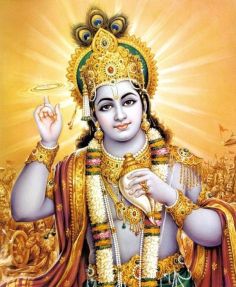
गीता-गीत GITA-GEET गीता चतुर्थ अध्याय श्लोक (16-22 ) Gita-Chapter 4 Verses (16-22)

गीता-गीत GITA-GEET

गीता चतुर्थ अध्याय श्लोक (16-22 ) Gita-Chapter 4 Verses (16-22)

कर्मज्ञान Knowledge about Karma (Actions)


किं कर्म किमकर्मेति कवयोऽप्यत्र मोहिताः ।

       तत्ते कर्म प्रवक्ष्यामि यज्ज्ञात्वा मोक्ष्यसेऽशुभात्‌॥16

                                                 है कर्म क्या, अकर्म क्या, विद्वान मोहित यहाँ सब|

करता हूँ वर्णन कर्म, जान तुम्हें अशुभ से मुक्ति तब॥4-16॥

Even the intelligent are bewildered in determining what is action and what is inaction. Now I shall explain to you what action is, knowing which you shall be liberated from all sins.


कर्मणो ह्यपि बोद्धव्यं बोद्धव्यं च विकर्मणः ।

           अकर्मणश्च बोद्धव्यं गहना कर्मणो गतिः ॥4-17

                                                      जान लें कर्मों को और विकर्म को भी जान लें ।

कर्म गति है कठिन, अतः अकर्म को पहचान लें।।

नियत गुण-अनुरूप कर्म, मन के विरुद्ध विकर्म है।

कर्म-फल की चाह यदि न, अकर्म उसको मान लें॥4-17॥

The intricacies of action are very hard to understand. Therefore, one should know properly what action is, what forbidden action is, and what inaction is. It is called Karma or action only if one is engaged in the activities that suits to his nature and characteristics. If one has to perform an activity unwillingly with negative thinking, it will be termed as Vikarma or forbidden action. Actions performed because it is the duty without the desire of any personal gain in return, is termed as Akarma or inaction.


कर्मण्य कर्म यः पश्येदकर्मणि च कर्म यः ।

स बुद्धिमान्मनुष्येषु स युक्तः कृत्स्नकर्मकृत्‌ ॥4-18

कर्म में जो न कर्म देखे, कर्मफल की न जिन्हे चाह।

अकर्म में कर्म माने, क्रिया में न हो  मन की राह।।

मनुष्यों में बुद्धिमान है वह, योग से भी युक्त वह।

            सब करने पर भी, कर्म-बंधन की न उस पर निगाह॥4-18॥

A person, who sees inaction in action and action in inaction is a wise man and perform an action without desire of any personal gain, is called Yogi and wise among all human-being. As the expectation of desired result will be nearly zero, the depression from not getting the expected result will not happen.


यस्य सर्वे समारम्भाः कामसंकल्पवर्जिताः ।

           ज्ञानाग्निदग्धकर्माणं तमाहुः पंडितं बुधाः॥4-19

कर्म के आरंभ में निज कामना से दूर हो ।

ज्ञानाग्नि से कर्म को परखा गया भरपूर हो ।।

जिसकी सभी योजनाएं इस तरह प्रारंभ हों।

          बुद्धिमान कहें उसे पंडित वही मशहूर हो॥4-19॥

One who start actions without any desire for sense of gratification and acquire complete knowledge of the activities to be performed and their intricacies, is called wiseman by all intelligent persons.


त्यक्त्वा कर्मफलासङ्गं नित्यतृप्तो निराश्रयः ।

          कर्मण्यभिप्रवृत्तोऽपि नैव किंचित्करोति सः ॥4-20

कर्म-फल के प्रति रही जो चाह, वह सब छोड़ कर।

स्वयं में संतुष्ट नित्य, जो न निर्भर किसी मोड़ पर ।।

सभी कर्मों के प्रति प्रवृत्त सदा रहते हुए भी न तो वह।

             कर रहा कुछ, न कुछ फल कभी कर्म बंधन जोड़ कर॥4-20॥

A wise person acts out of pure love for the Supreme Personality of Godhead, and therefore he has no attraction for the results of the action. He is not even attached to his personal maintenance, for everything is left to Supreme-being. Such an unattached person is always free from the resultant reactions of good and bad; it is as though he were not doing anything. This is the sign of akarma, or actions without fruitive reactions.


निराशीर्यतचित्तात्मा त्यक्तसर्वपरिग्रहः ।

            शारीरं केवलं कर्म कुर्वन्नाप्नोति किल्बिषम्‌ ॥4-21

नियंत्रित मन बुद्धि, फल की इच्छा से जो रहित ।

त्याग दिए सब संग्रह, किये स्व-अधिकारों सहित।।

जो कर रहे कर्म केवल शरीर निर्वाह के हित ही।।

          नहीं लगता पाप उनको, जो हैं स्वकार्यों में निहित॥4-21॥

Such a man of understanding acts with mind and intelligence perfectly controlled, gives up all sense of proprietorship over his possessions and acts only for the bare necessities of life. Thus working, he is not affected by sinful reactions. One who does karma only to sustain his body does not incur sin.


यदृच्छालाभसंतुष्टो द्वंद्वातीतो विमत्सरः ।

            समः सिद्धावसिद्धौ च कृत्वापि न निबध्यते ॥4-22

संतुष्ट, अपने आप से लाभ जो मिले वहीं ।

द्वंद्वों से रहित, न वह ईर्ष्या रखते कहीं।।

सिद्धि-असिद्धि में जो हैं सम रहते सदा ।

               कर्म कर भी, वह कर्म-बंधन में बंधते नहीं॥4-22॥

He who is satisfied with gain which comes of its own accord, who is free from duality and does not envy, who is steady both in success and failure, is never entangled, although performing actions.


Learning: Every activity cannot be termed as Karma (action). One has to bear the consequences of the actions performed by him. This is termed as KARMA-BANDHAN (bindings of actions).

  • Karma (action) is the activity assigned to you suiting to your nature and characteristics.
  • Vikarma (unwilling actions) is performed unwillingly with hostile thinking in your mind.

For both types of activities, one is answerable for the results; so, he is to bear the consequences. He will bound by the actions i.e. KARMA-BANDHAN (bindings of actions) will be there.

  • But if you are performing an action according to requirement of the duty assigned to you without any desire for the personal gain, you are working as a tool only. So, it is called AKARMA (inaction). There will be no KARMA-BANDHAN (bindings of actions) if you are performing inaction or AKARMA. You are liberated from the consequences of the actions performed by you.
YUGADI NAVDURGA AND SYNERGY TO WIN CORONA (युगादि नवदुर्गा पर संमलित शक्ति से कोरोना पर विजय)

YUGADI NAVDURGA AND SYNERGY TO WIN CORONA

(युगादि नवदुर्गा पर संमलित शक्ति से कोरोना पर विजय)

The word Ugadi (युगादि) is derived from the two words ‘Yuga’ and ‘Adi’. Yuga (in sansakriti) means the period or era and Aadi(in sansakriti) means the beginning. Uga उग also means commencement of germination. So this is the  day when creation had started in the universe. Ugadi is assumed as the day, the Creator (Lord Brahma ब्रम्ह प्रजापति) had commenced the creation. To commemorate the commencement of Creation, this day is celebrated as Ugadi.

Sun and Earth’s Orbit: The sun, the source of light and life to every living being is a unifying force. Because the plane of the ecliptic (the plane of the Sun’s apparent path on the sky) is titled with respect to the celestial equator (the plane perpendicular to the earth’s spin axis), the respective hemispheres receive more direct or less direct sunlight at different times in the earth’s orbit around the Sun.

There is the role Earth’s orbit plays in the seasons, which we referred to above. The four seasons are determined by the fact that the Earth is tilted 23.5° on its vertical axis, which is referred to as “axial tilt.”

Thus astronomically, earth undergoes two major sun operations in a year. Seasons are dependent on the direction of the relative movement of the sun. Two times, the two seasons summer and winter combine.

The first union of two seasons comes in March end to mid April (CHAITRA SHUKLA PRATIPADA TO NAVAMI as per Hindu calendar) These nine days/nights are called NAVRATRI. the sun appears to move northward, the sun rays are more intense and the environment is more of a dry kind. This signifies the coming of summers.

Astronomical status on Yugadi

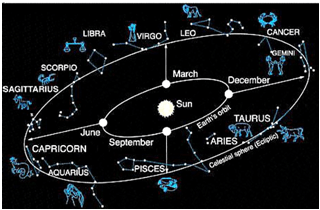
Moon’s position: The Moon’s orbit lasts 27.5 days, but because the Earth keeps moving, it takes the Moon two extra days, 29.5, to come back to the same place in our sky. This is called lunar month or Chandramas चन्द्रमास.  As per Chandramas the lunar month is denoted by the star on the full moon day. For example when the full moon day is in the star constellation of Chitraचित्रा that month is referred to as Chaitra Masa चैत्रमास  whose beginning day is celebrated as Ugadi. On Yugadi, day moon enters on Mesha Rasiमेष-राशि  (Aries), the first sign of the zodiac.

 Sun’s position: On “Yugadi” day Sun sets his journey towards East and prepare for entering Mesha Rasiमेष-राशि  (Aries). Astrologically Mesha Raasi (Aries) is the sign of exaltation for Sun.                                During this month after sunset on the horizon, we can visualise the constellation “Simha” सिंह-राशि (Leo) and later Kanya कन्या-राशि (Virgo) hence we have the image of “Durga Maa दुर्गा माँ as a “Woman sitting on Lion”. So, there is a festival called “Vasanth Nava Durga” celebrated during the first 9 days of chaithra maas shukla pax.

The lion is a symbol of uncontrolled animalistic tendencies such as anger, arrogance, selfishness, greed, jealousy, desire to harm others etc. The image of  Durga on lion reminds us to have a control on these tendencies and protect your mind from vitiating from these evil tendencies.

zodiac

Because of the begining of the change of season, during these periods human body becomes more prone to diseases as it is less resistant, both physically and mentally to the attack of outside environment, micro organism, bacteria and viruses. Remedial measures to combat the possible disease is the deep significance in celebrating the NAVRATRI. Our body acts as a fortress  for us; and body’s immune system is the army that  defends our body-systems from the outside environment and foreign bodies such as micro organism, bacteria and viruses. The Sanskrit word Durga (दुर्ग) means fort or a place that is protected and thus difficult to reach. It is derived from the roots ‘dur (दुर्)‘ (difficult) and ‘gam (गम)‘ (pass, go through). According to Ayurveda, fasting enegises the digestive fire. An increase in the digestive fire burns the toxins in the body. When the toxins are flushed out of the body, it loses dullness and lethargy. It helps in de-stressing and building up immunity. All the cells of the body are rejuvenated. Fasting, therefore, is an effective therapy to cleanse our body.

NavDurga signifies that we should renew our body system (DURGA) by detoxifying through keeping fast, purifying the environment by HAVAN or YAGYA. Also we need to get rid of all the negative feelings and emotions. Our nervous system needs to be strengthened by performing a specific meditation (SADHANA) and prayer each night of NAVRATRI in the manner specified for that (NAV DURGA) day in order to rejuvenate our mind and nerves in order to make our body capable to fight disease and get success in life. Thus, there are three rituals that are followed during Nav-Durga days in order to stregthen our own two fortress (Durga दुर्ग) body and mind:

  1. Fasting
  2. Yagya
  3. Prayer and Celebration

When the body is cleansed, the mind becomes calmer and more peaceful and alert because of the deep connection between the body and mind. When you are fasting, you are detoxified, and your prayer becomes authentic and deep. Yagya and Havan purifies the environment from bacterias and viruses that may cause diseases. Prayer and celebrations  fill us with the positive energythat strengthen our nervous system.

There is also a health message involved in keeping fast and eating specific items these days. For example, Neem नीम is good for diabetes, skin diseases and acts as a blood purifier. Even today usage of neem leaves is prevalent in rural areas whenever anyone is infected with small pox/chicken pox. Jaggery helps in increasing the hemoglobin content of blood that helps in iron deficiency, Tamarind helps in removing excess of kapha कफ (steady and slow), vata वात (light and quick) , and pitta पित्त (intese) , raw Mango works in throat related problems and enhances the appetite, Chillies removes kapha and vata, pepper helps in cold and works in throat related problems.Capture

SYNERGY: Synergy is a state in which two or more agents, entities, factors, or substances work together in a particularly fruitful way that produces an effect greater than the sum of their individual effects.

Durga and Synergy: The Synergistic effect has been explained in interesting way through indian mythology. Supreme Energy that is being recognized as the Super power or Supreme God/ Goddess. Adishakti (आदि शक्ति) is the name given as per Indian mythology. Adishakti created three types of forces in the form of Trinity of great Gods. The Trinity of great Gods Shiva, Brahma and Vishnu are the forms of universal forces: Nuclear forces, Gravitational forces, and Electro-magnetic forces respectively.

Other gods (Devas) are divine powers within this material universe or nature. They represent spirits behind specific posts in the affairs of running the world of nature; such as Agni Dev (the god of fire), Vayu Dev (the god of the wind), Varuṇa Dev (the god of the ocean), Indra Dev (the king of the celestial gods), etc.

A great light issued from Vishnu, Shiva, Brahma and other gods, from their joint energies, emerged a unique radiance that took female form, Devi Durga. Other gods also contributed in the formation of Durga. Shiva gave her his trident, Vishnu his discus, Varuna a conch, Agni a spear, Indra a thunderbolt, Surya bestowed his own rays on all the pores of her skin and Kala (time) gave her a sword and shield. Thus, Devi Durga came on the earth with synergy of all the great powers.

Armed by the gods, the Devi challenged the buffalo-demon, Mahishasura, and a fierce war ensued. She struck off his head with her sword and the asura army perished. So, she is called Mahishasuramardini.

RAKTABEEJ AND CORONA: The demon Raktabeeja was a bigger challenge because from every drop of his blood that fell on the ground there arose a thousand others like him. Durga, therefore, took the blood in her mouth before it touched the ground and killed the demon. Synergy plays its role here. We all should pray for blessings of Durga who is the incarnation of synergy. Our joint effort will defeat Corona. Here inaction become more significant than action. We human-beings may be the carrier of the coronavirus. So, we must lie low. To stay alive, we have to stay home and take all necessary precautions. The enemy, we are facing, is invisible. Our life is very fragile – a microscopic virus can kill us. We must learn how to be strengthened with synergy without much to do in order to defeat corona-virus.

गीता-गीत GITA-GEET गीता चतुर्थ अध्याय श्लोक (10-15 ) Gita-Chapter 4 Verses (10-15)

गीता-गीत GITA-GEET

गीता चतुर्थ अध्याय श्लोक (10-15 ) Gita-Chapter 4 Verses (10-15)

सफल-राह की खोज (Search for path of Success)

वीतरागभय क्रोधा मन्मया मामुपाश्रिताः ।

           बहवो ज्ञानतपसा पूता मद्भावमागताः ॥4-10

आसक्ति भय और क्रोध से जो मुक्त है|

मुझ पर आश्रित पूर्णतः मुझ में युक्त है||

ज्ञान और बहु-विधि तपस्या से पवित्र हो|

                 मेरे ही स्वरूप में, आने हित उपयुक्त है||4-10||

The person who is free from attachment, fear and anger, being fully absorbed in Me (Supreme-being) and taking refuge in Me (have full faith in God and so confident). Such person acquires knowledge and perform all types of hard work to achieve success of his goal. They all attained transcendental love for Me (Supreme being). It means they act with full confidence in himself as they have acquired complete knowledge of his work and prepared to do hard work. They may be considered to have come on the earth as incarnation of mine (God) (4-10)


ये यथा माम्  प्रपद्यन्ते तांस्तथैव भजाम्यहम्‌ ।

मम वर्त्मानुवर्तन्ते मनुष्याः पार्थ सर्वशः ॥4-11

जो जैसे मुझ में अर्पित, उनको वैसे ही मैं भजता |

                अर्जुन! सब तरह मनुष्य मेरा मार्गानुकरण करता ||4-11||

People start following the way great man (who is considered the incarnation of Supreme being) of that time act. All of them-as they surrender unto Me-I reward accordingly. Men follow in every way my path in all respects, O son of Pṛthā.(4-11)

काङ्‍क्षन्तः कर्मणां सिद्धिं यजन्त इह देवताः ।

क्षिप्रं हि मानुषे लोके सिद्धिर्भवति कर्मजा ॥4-12

कर्म-सिद्धि की रख आकान्क्षा मन में |

पूजन करते देवताओं को धरा गगन में ||

शीघ्र सफल होते वह इस मनुष्य-लोक में|

              लगते वे तन-मन से कर्म-जनित लगन में ||4-12||

They who desire the fulfillment of their works on earth, worship to the gods in various forms. It is the way to achieve quick success by serving such great personalities.  because the fulfillment that is born of works (of works without knowledge) is very swift and easy in the human world.

चातुर्वर्ण्यं मया सृष्टं गुणकर्मविभागशः ।

         तस्य कर्तारमपि मां विद्धयकर्तारमव्ययम्‌ ॥4-13

जिसके जैसे प्रकृति-गुण, वैसे उसके कर्म |

कर्म-विभाजन में छिपे, सभी वर्ण के मर्म ||

उसके कर्ता को, अ-कर्ता अविनाशी  जान |

              कररहे पालन सभी, प्रकृति-जनित गुणधर्म||4-13||

Human society has been divided in four varnas according to their inherent attributes or natural propensities (prakriti) and their contribution to the society. Though, Lord is considered to be creator for everything in the world. But in this aspect, He should be considered as Non-doer because everybody is following his own natural-characteristics. Varna is decided according to his contribution to the society.


न मां कर्माणि लिम्पन्ति न मे कर्मफले स्पृहा ।

इति मां योऽभिजानाति कर्मभिर्न स बध्यते ॥4-14

जो समझते, नहिं मुझे कर्म के फल की चाह|

न ही लिप्त करते मुझे, विविध कर्म की राह||

जिसको इस-तरह स्वयम में पूर्ण रूप से ज्ञान |

                 कर्म जनित बंधन नहीं उन पर फैला सके बांह ||4-14||

As I (incarnation of Supreme being) have no attachments for the results of the actions performed, so my actions do not bind me. Great personalities have no attachments as they act taking care of the interest of all. One who understands thus, and perform like this, does not get entangled with the bondages of actions.


एवं ज्ञात्वा कृतं कर्म पूर्वैरपि मुमुक्षुभिः ।

         कुरु कर्मैव तस्मात्वं पूर्वैः पूर्वतरं कृतम्‌ ॥4-15

पहले भी जिनको थी, मोक्ष की चाह|

किए थे कर्म ऐसे ही, जान यह राह||

पूर्वजों ने पहले, जैसे किए सभी कर्म|

                   करो कर्म इसलिए वैसे, है तुम्हें सलाह||4-15||

All the liberated souls in ancient times acted with this understanding and so attained liberation from bondages of actions. Therefore, as the great persons earlier acted, you should you should also perform your duty in this divine consciousness.

Learning

Identification of incarnation of Supreme-being: The most successful person is one who is considered to be incarnation of God on earth. Such person is free from attachment, fear, anger and have full confidence in himself i.e. fully surrendered to the Supreme-Being.

Shift in Attitude and Change in Thinking:

The Gita says you too can metamorphose from an ordinary to an extraordinary immortal. It takes you step by step to the highest pedestal of human excellence. Not everyone is hugely talented or blessed with a high IQ, but every single person has spirit in equal measure.

  • As you think, so you become.
  • You have been thinking of body, mind and intellect continuously, so you have become weak.
  • What you do matters little. It is where your mind is that makes the difference.
  • Prayer or worship is not a casual, once. It is a full time focus on the transcendental.
  •  Everyone has infinite potential and talent. Yet most people live and die without having so much as a glimpse of who they really are or what they bring to the world.
  • The Bhagwad-Gita helps unlock your potential so that you gain power to rock the world. All it takes is a slight shift in attitude, change in thinking.

गीता-गीत (GITA-GEET) गीता चतुर्थ अध्याय श्लोक (1-9) Gita-Chapter 4 Verses (1-9)

गीता-गीत (GITA-GEET)

गीता चतुर्थ अध्याय श्लोक (1-9) Gita-Chapter 4 Verses (1-9)

अवतार रहस्य (SECRET OF INCARNATION)

श्री भगवानुवाच

इमं विवस्वते योगं प्रोक्तवानहमव्ययम्‌ ।

विवस्वान्मनवे प्राह मनुरिक्ष्वाकवेऽब्रवीत्‌ ॥4-1॥

विवस्वान को कहा था मैंने, अविकारी यह योग महान

           मनु ने विवस्वान से, मनु से इक्ष्वाकु ने पाया यह ज्ञान॥4-1॥

I instructed this imperishable science of yoga to, Vivasvān, and Vivasvān instructed it to Manu, and Manu in turn instructed it to Ikṣvāku.


एवं परम्पराप्राप्तमिमं राजर्षयो विदुः ।

स कालेनेह महता योगो नष्टः परन्तप ॥4-2॥

परम्परा से पाकर ऐसे, राजर्षियों ने जाना यह ज्ञान |

     कालांतर से लुप्त हो गया, हे अर्जुन! यह योग महान ||4-2||

This supreme science of yoga was thus received through the chain of disciple succession, and the saintly kings understood it in that way. But in course of time the succession was broken, and therefore the science as it appears to be lost. (4-2)


स एवायं मया तेऽद्य योगः प्रोक्तः पुरातनः।

   भक्तोऽसि मे सखा चेति रहस्यं ह्येतदुत्तमम्‌ ॥4-3॥

मेरे द्वारा आज कहा गया यह वह योग पुरातनतम|

    तुम हो मेरे भक्त व सखा निश्चय यह रहस्य उत्तम॥4-3॥

That very ancient science of the relationship with the Supreme is today told by Me to you because you are My devotee as well as My friend; therefore, you can understand the transcendental mystery of this science. (4-3)

अर्जुन उवाच

अपरं भवतो जन्म परं जन्म विवस्वतः ।

      कथमेतद्विजानीयां त्वमादौ प्रोक्तवानिति ॥4-4

आप तो इस समय जन्मे, विवस्वान का जन्म पुराना |

    मैं कैसे यह समझूँ, उन्होंनें आदिकाल में तुमसे जाना||4-4||

Arjun said that Vivasvan Surya was born earlier so is much senior

How can I agree that you instructed him, as by birth you are much junior (4-4)

श्रीभगवानुवाच


बहूनि मे व्यतीतानि जन्मानि तव चार्जुन ।

      तान्यहं वेद सर्वाणि न त्वं वेत्थ परन्तप ॥4-5

बहुत जन्म व्यतीत हो चुके, सुनो हे अर्जुन मेरे तुम्हारे |

      नहीं ज्ञात तुमको कुछ अर्जुन!, किन्तु जानता हूँ मैं सारे||4-5||

Because of past actions, you have no intuitional knowledge. The eye of wisdom is not opened, power of vision is not present. So, you do not know your previous births. But I know them.


अजोऽपि सन्नव्ययात्मा भूतानामीश्वरोऽपि सन्‌ ।

प्रकृतिं स्वामधिष्ठाय सम्भवाम्यात्ममायया ॥4-6

अजन्मा भी होते हुए, अविनाशी आत्मा,

समस्त प्राणियों का भी  होकर परमात्मा|

स्वयं को अपनी प्रकृति में अधिष्ठित कर,

    आत्म-माया से  जन्म लूं ,बन जीवात्मा ||4-6||

Being birth-less and un-decaying by nature, I am the Supreme Soul. After establishing under control of the Nature, I appear embodied through My Maya.

यदा यदा हि धर्मस्य ग्लानिर्भवति भारत ।

      अभ्युत्थानमधर्मस्य तदात्मानं सृजाम्यहम्‌ ॥4-7

जब जब धर्म का होता है ह्रास |

अर्जुन! अधर्म का होता विकास ||

तब स्वयं शरीर का सृजन कर |

       सगुण रूप में करूँ भू पर वास||4-7||

O! son of Bharat! whenever on earth righteousness becomes less and there is exaltation of unrighteousness, I create Myself in suitable body form.

sacred_heart_jesus_christ_1


परित्राणाय साधूनां विनाशाय च दुष्कृताम्‌ ।

    धर्मसंस्थापनार्थाय सम्भवामि युगे युगे ॥4-8

भक्तों का करने उद्धार,  दुष्टों का करने संहार|

       धर्मपुनर्स्थापन के हित युग युग में लेता अवतार||4-8||

For the protection of the good, for the destruction of the wicked, and for the establishment of Dharma, I come into being, in every age.”


                                                     जन्म कर्म च मे दिव्यमेवं यो वेत्ति तत्वतः ।

     त्यक्तवा देहं पुनर्जन्म नैति मामेति सोऽर्जुन ॥4-9krishna in mahabharat

जन्म और कर्म मेरे होते सभी दिव्य,

तत्व से ऐसा जो व्यक्ति जान-जाता |

त्याग कर देह न पुनर्जन्म पाता फिर,

        वह हे अर्जुन! सीधे मुझको पा  जाता ||4-9||

One who knows Arjun! that My birth and deeds are divine. After leaving body, he is not born again but attains place of mine.

LEARNING

Birth of Divine Power: For the sake of firmly establishing righteousness, Supreme Power takes birth in every age. Whenever virtue subsides and immorality prevails, the Supreme divine power comes on the earth to guide human-being. As Lord Krishna was born five thousand years ago, Jesus Christ also took birth more than two thousand years ago to establish a new religion Christianity to show us the path of compassion and love. Needs of people vary with the time according to the environment prevailing at that time. Accordingly, Divine persons initiate actions to improve the condition of human-being and guide them accordingly to the righteous path.

Both Super soul (God) and souls are ‘unborn’ in the sense that they are not created by anyone but are evolved by the nature with the help of consciousness from the Supreme conscious energy.

  1.  Souls are born in the sense that they take birth due to past ‘karma’.
  2. The Super-soul (Param-atma) has no Karma for which he has to take a

body. The Super-soul (Param-atma)

–          is born in the sense that He takes birth due to ‘karuna’ (pity), but

–          unborn in the sense that he is unaffected by past karma, and is born of his own free will.

Param-atma comes as an incarnation based on the conditions of the world. Birth of Super-soul takes place after controlling trinity of nature (trigunamayee prakriti) through divine process (Maya).

Karma or action of Super-soul in incarnation is to protect good features and to destroy bad characteristics. Super-soul’s birth and actions, both are divine. One who knows  both, is having  knowledge of original elements of nature and energy (i.e. tatva-darshee) . Soul (Atma) is the Supreme Element (param-tatva) and if atma joins param tatva then merges with Paramatma. Then it will not be possible to take rebirth., He does not abandon the world. He comes to set things right and show the path.

Lord Krishna, Buddha, Jesus Christ were the such Super Soul who showed the path of righteousness to human-being.

In order to become super-soul, one should act for the benefits of the society as whole (i.e. with Karuna) and not to react against environment for the personal benefits only.

Lord Krishna said, “Anyone who leaves his body after knowing My Divine Birth and Action, is not born again but comes to Me i.e. he is liberated from the cycle of life and death.”

गीता-गीत (GITA-GEET) तृतीयो अध्याय (श्लोक 36-43) Third chapter (Verses 36-43) पाप प्रेरक श्रोत (Sources Inspiring for wrong actions)

गीता-गीत (GITA-GEET)

तृतीयो अध्याय (श्लोक 36-43) Third chapter (Verses 36-43)

         पाप प्रेरक श्रोत (Sources Inspiring for wrong actions)


अर्जुन उवाचः

अथ केन प्रयुक्तोऽयं पापं चरति पुरुषः ।

अनिच्छन्नपि वार्ष्णेय बलादिव नियोजितः ॥3-36

किससे प्रेरित पुरुष कर रहे पाप-कार्य प्रायोजन

              बिन इच्छा के भी बलात्, वे करते है आयोजन ॥3-36॥

Arjuna asks Lord Krishna impelled by what, Krishna!, does the man commit sin even involuntarily, as though he is being forced. (3-36)


श्रीभगवानुवाच

काम एष क्रोध एष रजोगुणसमुद्भवः ।

महाशनो महापाप्मा विद्धयेनमिह वैरिणम्‌ ॥3-37

प्रकट रजोगुण से हो काम, क्रोध जब बाधा आये |

प्रेरित करें पाप आचरण हित मन को भरमाए||

तृप्त न हो यह काम कभी पापी महान बलवान|

समझो इन्हें सदा निश्चय ही दुर्जय शत्रु समान||||3-37||

Lord Krishna answers it is desire for materialistic attractions. Desire or lust (Kaam) and anger are intimately connected to a human being and are born out of Rajo guna (passion). When one desire is met, desire to get more is created. Thus desires or Kama could never be satisfied. (3-37)


धूमेनाव्रियते वह्निर्यथादर्शो मलेन च।

यथोल्बेनावृतो गर्भस्तथा तेनेदमावृतम्‌ ॥3-38

धुंए से ढँक जाए अग्नि फिर बाहर से न चमकती

ढँकजाए यदि मैल से दर्पण न प्रतिबिम्ब झलकती

जेरी से जब गर्भ ढँके, तब भ्रूण न धड़कन पाए |

ढकले काम ज्ञान को, तब विवेक न कुछ कर पाए ||3-38||

Thick smoke from fire covers it, and fire is not able to do its fundamental job of  providing brightness of light. Similarly a mirror when covered with dirt, is unable to do its job of reflecting the image. A child in womb is not free to move about. In the same way, when wisdom is covered by desire, the intellect or discriminatory power is suppressed and is unable to function properly. (3-38)

आवृतं ज्ञानमेतेन ज्ञानिनो नित्यवैरिणा ।

कामरूपेण कौन्तेय दुष्पूरेणानलेन च ॥3-39

मन कठिन है शांत करना, कामरूपी आग से |

इन्द्रियां न तृप्त होतीं काम भोग के राग से ||

कामनाओं से ढका होजाय सीमित जहां ज्ञान |

ज्ञानियों के लिए  वह काम दुर्जय शत्रु जान ||3-39||

It is very difficult to pacify mind, when strong desires enter into it. The knowledge of even the most discerning gets covered by this perpetual enemy in the form of insatiable desire.  which is never satisfied and burns like fire, O son of Kunti Arjuna! (3-39)

इन्द्रियाणि मनो बुद्धिरस्याधिष्ठानमुच्यते ।

एतैर्विमोहयत्येष ज्ञानमावृत्य देहिनम्‌ ॥3-40

तस्मात्त्वमिन्द्रियाण्यादौ नियम्य भरतर्षभ ।

पाप्मानं प्रजहि ह्येनं ज्ञानविज्ञाननाशनम्‌ ॥3-41

कहे जाते इन्द्रियां मन बुद्धि इसके अधिष्ठान|

देह-धारी को विमोहित कर रहा ढक सदा ज्ञान||

इसलिए आरम्भ से ही संयमित कर इन्द्रियों को|

काम पापी मार, ज्ञान विज्ञान नाशक इसको मान||3-40,41||

The senses, mind, and intellect are said to be breeding grounds of desire. Through them, it clouds one’s knowledge and deludes the embodied soul. (3-40)

Therefore, O best of the Bharatas, in the very beginning, bring the senses under control and slay this enemy called desire, which is the great symbol of sin [lust] and destroys knowledge and realization..(3-41)


इन्द्रियाणि पराण्याहुरिन्द्रियेभ्यः परं मनः ।

मनसस्तु परा बुद्धिर्यो बुद्धेः परतस्तु सः ॥3-42

एवं बुद्धेः परं बुद्धवा संस्तभ्यात्मानमात्मना ।

जहि शत्रुं महाबाहो कामरूपं दुरासदम्‌ ॥3-43

इन्द्रियों को श्रेष्ठ कहते, इन्द्रियों से श्रेष्ठ मन|

मन से श्रेष्ठ बुद्धि, उससे श्रेष्ठ स्वयं आत्मन्||

इस तरह  बुद्धि से भी श्रेष्ठ आत्मा को समझ|

आत्मा द्वारा, दुर्जय  कामरूपी  शत्रु कर दमन||3-42,43||

The senses are said to be superior to the body. The mind is superior to the senses. Greater than the mind is the intellect; and what is greater than intellect is he(the self) (3-42)

Thus awakening is possible by the understanding to the Highest that the soul is superior to the material intellect, and one can, subdue the self (senses, mind, and intellect) by the self (strength of the soul), and kill this formidable enemy called lust. (3-43)


LEARNING:

Desire or lust is the greatest enemy of a human being. Lust is insatiable and is a great devil.

It is lust, that becomes anger (when unfulfilled).

  1. Anger is nothing but manifestation of unfulfilled, obstructed desire
  2. When desire is fulfilled, this leads to greed.

Therefore intensity of anger is proportional to the intensity of desire. So they can be  treated as two sides of the same coin. Individually, they are not separate, handling one is enough to handle the other. Thus, we should keep in mind the followings:

  1. Knowledge stand covered by this eternal enemy, known as desire, which is insatiable like fire.(In Sanskrit, अनलम् = अन् + अलम् – no satisfaction – that which cannot be satiated.) Desires are like fire. A fire can burn its very locus and similarly, desire it’s very origin. So while each desire gets fulfilled the list of unfulfilled desires grow. Only when leading a pious life can one discover this fundamental, root cause of dissatisfaction.
  2. Anger too is similar. Anger makes a person violent – verbally and physically.
  3. Such an extrovert, violent person, consumed by desire and anger, cannot follow Dharma and is bound to sin.
  4. When compared with the physical body which is gross, external and limited,
  5. the senses are certainly superior as they are more subtle, internal and have a wider range of activity. When desire gets generated, it finds its base first in sense organs which introduce sensuous objects to us.
  6. the mind is superior to the senses, as the senses cannot do anything independently without the help of the mind. The mind can perform the functions of the five senses. The mind imprints in the five senses and these sights, sounds, etc. (called vasanas) continues to dwell upon them and yearn for them again and again.
  • the intellect is superior to the mind because it is endowed with the faculty of discrimination. When the mind is in a state of doubt? the intellect comes to its rescue. The intellect should discriminate between right and wrong judgment. Wrong judgment and delusive thinking convinces that external world can give joy and satisfaction and increases obsession with the desire.
  1. The Self is superior even to the intellect. “I” or self is the source of joy or sorrow. Take the example of a rope. When in darkness, a garland mistaken to be a snake can be the source of fear. But in brightness, understanding the original nature of the rope dispels our misgivings. Similarly, when misunderstood “I” becomes the source of sorrow. But when its proper nature is understood, “I” becomes a source of joy. The world by itself is not a source of joy or sorrow.

So, the self needs to be enlightened

Self enlightenment: There are four supreme effort oriented gains  (Purushatha): 1.Duty  (Dharma), 2. Money (Artha), 3. Desire (Kama), 4. Liberation (Moksha) to strive for.  Out of four supreme effort oriented gains  (Purushatha), Money (Artha) and Desire (kama) are considered important, but dharma and  moksha are still more  important.  When artha and kama are considered more important than dharmaand  mokhsa, that becomes an obstacle in achieving the goal of life. There are two stages to handle this obstacle:

First Stage:

Dhamaha(दमः) – Mastery of sense organs; don’t let anything enter your mind without control.

Shamaha(शमः) – Discipline of mind and thought pattern. Undisciplined mind has a tendency to get attracted to anything.

Vivekaha(विवेकः) – Discrimination; understanding that finite plus finite is always finite; insecurity plus insecurity is more insecurity.

Second Stage:

Self awakening: Understand that I am complete (पूर्णत्वं) with myself and I will not be full with any amount of acquisition. Obsolete solution is to discover fullness and security within self by self awakening.

*SCIENTIFIC SIGNIFICANCE OF FIVE DAYS DIWALI FESTIVALS *

*SCIENTIFIC SIGNIFICANCE OF FIVE DAYS DIWALI FESTIVALS *

Axis of the Earth is inclined at 23.5 degree from the axis of its orbit in which it revolves around the Sun. When the sun appears to move southward of the equator (Dahshinayana), intensity of the sun is not harsh during this period, and the environment is full of moisture. As Earth orbits the sun, the sun appears to pass in front of different constellations. The signs are derived from the constellations that mark out the path on which the sun appears to travel over the course of a year. During Diwali (around October), winter season approches; and before sun-rise, we can visualise the constellation “Libra” {तुलाराशि} on the horizon as ascendants. This signifies the onset of winters. Because of the begining of the change of season, during these periods human body becomes more prone to diseases as it is less resistant, both physically and mentally to the attack of outside environment, micro organism, bacteria and viruses. In order to remain disease free during these days, it is the utmost necessity that the area around you should be clean and hygenic. Before Diwali, people clean or decorate their homes and workplaces by cleaning, whitewashing and painting. Leading up to this day, houses and businesses are cleaned and decorated.

On the days of Diwali festival, the Sun, and the Moon are in conjunction which means that this period promotes harmony. Both these luminaries the Sun and the Moon are placed in Libra ( in the Swati Nakshatra). Libra or Tula is denoted by the balance symbol representing universal brotherhood, a much needed character for observing a festival of joy.

This balance of the Sun and the Moon is to be maintained in our body also. We have two nostrils for breathing. Normally on nostril is operating at a time. Left nostril is said to be connected with Moon-nerves (चन्द्र-नाड़ी) as breathing in through this will cool the body. Right nostril is said to be connected with Sun-nerves (सूर्य-नाड़ी) as breathing in through this will heat the body. In order to maintain health of the one should balance by breathing in alternately with left and right nostril (नाड़ी-शोधन प्राणायाम)

Dhan terasa: Dhanvantari, the god of good health and medicine, emerged  with the gift of Ayurveda (the knowledge of life) to humanity. One can enjoy wealth only when he is blessed with the health. Celebration of Dhanteras is to show importance to health and bringing wealth to home.

Narak Chaturdashi: When the body is cleansed, the mind becomes calmer and more peaceful and alert because of the deep connection between the body and mind. This day is celebrated by taking oil-bath in the morning and putting lighted lamps near drainages of the house to ensure perfect cleanliness.

Main Diwali: The Swati Nakshatra is the ruling Nakshatra during Diwali. This is a feminine constellation connected to Goddess of knowledge Saraswati, Laxmi, and Kali. One or more of these Mother Goddesses are worshipped on the Diwali day. Preference is given to Lord of intellect  Shree Ganesh before starting the worship of Laxmi. This symbolize that wealth should be earned by applying intellect fully. Then only purifying profit (शुभ लाभ) will make you prosperous. Floors are decorated with bright, geometric patterns called rangoli, which serve as symbols of good luck and welcome guests and Lakshmi. According to sixth shloka of second chapter of Rigveda Goddess Laxmi is invited by following Mantra

ॐ हिरण्य-वर्णां हरिणीं, सुवर्ण-रजत-स्त्रजाम्।…
चन्द्रां हिरण्यमयीं लक्ष्मीं, जातवेदो म आवह।।

Gowardhan Pooja (अन्नकूट): On this day lord Krishna is worshipped and mixed vegetable (अन्नकूट) is prepared to signify that all sorts of vegetables and fruits should be eaten in order to be healthy.

Bhai duja: The Swati Nakshatra is the ruling Nakshatra during Diwali. This is a feminine constellation. Relation of brother and sister is considered the most holy relationship purifying the mind. Bhaiduj is celebrated to pay respect this relationship.  

Celebration is an attitude, to celebrate life you don’t have to spend a lot of money . Celebration comes from enthusiasm and joy . When you are depressed, that’s when celebration is needed the most. Reconcile with the past and move on to the future with enthusiasm and share what you have with others.

The cleaner the mind, the more one is attracted to all that is good and noble, and it is such a mind that seeks enlightenment. The multifarious lights that illumine homes during Diwali are a symbol of the human yearning for the light of true knowledge.

Just as darkness inspires fear and causes sorrow in the form of mishaps, ignorance of one’s true identity leads to all human suffering, as body-consciousness gives rise to vices such as lust, anger, attachment and ego, which corrupt our thoughts and actions.

There is something beyond the physical body and mind, which is pure and eternal, called the soul. The celebration of Diwali refers to the light of this higher knowledge, dispelling the darkness of ignorance which masks one’s true identity as an immortal, immanent being.

गीता-गीत GITA GEET तृतीयो अध्याय (श्लोक 27-35)Third chapter(Verses 27-35) सांख्य-योग दर्शन से कर्मयोग (Sankhya Yoga to Karma Yoga)

गीता-गीत GITA GEET

तृतीयो अध्याय (श्लोक 27-35)Third chapter(Verses 27-35)

सांख्य-योग दर्शन से कर्मयोग (Sankhya Yoga to Karma Yoga)

प्रकृतेः क्रियमाणानि गुणैः कर्माणि सर्वशः ।

अहंकारविमूढात्मा कर्ताहमिति मन्यते ॥3-27

प्रकृति के गुणों से  किये जाते सभी कर्म|

मोह से विमूढ़ जन नहीं समझे यह मर्म||

स्वयं को, अहंकार के बस वे कर्ता कहते |

                परन्तु कर्म निज प्रकृति के बस ही करते ||3-27||

All actions are performed as per one’s own  Prakriti or inherent nature. Prakrti denotes the universal aggregate of internal energy and power. Governed by them alone activities are going  on in the world. Not knowing that this is so, one under delusion feels and says ‘I am the doer or performer’.  (3-27)

तत्त्ववित्तु महाबाहो गुणकर्मविभागयोः ।

गुणा गुणेषु वर्तन्त इति मत्वा न सज्जते॥3-28

प्रकृति के  तेईस गुण-तत्वों से है श्रृष्टि सब|

कर्म, इनके परस्पर संबधों हित प्रयत्न जब||

गुण कर्म विभागों का हो ज्ञान यदि, अर्जुन!|

               गुण गुणों में वर्त रहे, क्यों हो! आसक्ति तब||3-28||

There are twenty three elements characteristic features as per  Sankkya Yoga Philosphy

Three Subtle body: False-ego,  Intelligence, Mind

Five gross elements: Ether, Air, Fire, Water, Earth

Five sense objects: Sound, Touch, Sight,Taste, Smell

Five knowledge-acquiring senses: Ear, Skin, Eye, Tongue, Nose

Five working senses: Voice, Legs, Arms, Reproductive organs, Evacuating organs

The senses naturally run toward the sense objects and their mutual interaction creates sensations of pleasure and pain. For example, the taste buds experience joy in contact with delicious foods and distress in contact with bitter foods. The mind repeatedly contemplates the sensations of pleasure and pain which it associates with these objects. Thoughts of pleasure in the sense objects create attachment while thoughts of pain create aversion. Shree Krishna tells Arjun to succumb neither to feelings of attachment nor aversion.(3-28)

प्रकृतेर्गुणसम्मूढ़ाः सज्जन्ते गुणकर्मसु ।

तानकृत्स्नविदो मन्दान्कृत्स्नविन्न विचालयेत्‌॥3-29

प्रकृति के गुणतत्वों में मोहित, सब होरहे व्यस्त|

गुणतत्त्वों से सम्बंधित कर्मों में, सतत आसक्त ||

इन अबोध, आसक्त-जनों को, नहीं करें विचलित|

             गुण-तत्वों के ज्ञानीजन, सदा कर्मों से अनासक्त||3-29||

Ignorant human-beings become bewildered by the characteristic features of the material energy of nature or Prakriti. Bewildered by the modes of material nature, the ignorant fully engage themselves in material activities and become attached. They work for to enjoy sensual and mental delights. They are unable to perform actions as a matter of duty, without desiring rewards. The persons, with knowledge of these elements of nature, should not disturb the mind of these ignorant persons without knowledge. Rather, they should instruct the ignorant to perform their respective assigned actions, and slowly help them rise above attachment. (3-29)

मयि सर्वाणि कर्माणि सन्नयस्याध्यात्मचेतसा ।

निराशीर्निर्ममो भूत्वा युध्यस्व विगतज्वरः ॥3-30

अर्पित सभी कर्म प्रभु को कर, लक्ष्य आत्म-उत्थान |

न फ़ल की हो अभिलाषा, न कभी हो उनका ध्यान ||

लें नहिं श्रेय सफल होने पर, न करें कभी अभिमान |

              बिन संताप युद्ध कर, यह निज नियत कर्म ही मान||3-30||

Do actions without desire and attachment leaving everything on God, Do not take any credit for the success you achieve and undertake this war in the state of peace considering this as your assigned duty.

ये मे मतमिदं नित्यमनुतिष्ठन्ति मानवाः ।

        श्रद्धावन्तोऽनसूयन्तो मुच्यन्ते तेऽति कर्मभिः॥3-31

जो मानव हैं दोषान्वेष्ण-बुद्धि रहित|

श्रृद्धा से भरपूर, मेरे इस मत के हित||

करते हैं अनुशरण नित्य ही इसी तरह|

             न कभी बंधे वे कर्मफलों से किसी तरह||3-31||

One who does not criticize others and executes his duties according to Krishna’s philosophy and who follows this teaching faithfully, without envy, becomes free from the bondage of fruit of actions.(3-31)

ये त्वेतदभ्यसूयन्तो नानुतिष्ठन्ति मे मतम्‌ ।

सर्वज्ञानविमूढांस्तान्विद्धि नष्टानचेतसः॥3-32

जो भी इन सब पर दोषारोपण करते |

मेरे मत का न कभी अनुकरण करते||

वे सब ज्ञान-विमूढ़ हो चुके ऐसा जानो|

              नष्ट विवेक-बुद्धि वाले ही उनको मानो||3-32||

But those who find fault with my teaching out of envy and disregard these teachings and do not practice them regularly, they are bewildered in all knowledge and fated to be destroyed. (3-32)

सदृशं चेष्टते स्वस्याः प्रकृतेर्ज्ञानवानपि ।

प्रकृतिं यान्ति भूतानि निग्रहः किं करिष्यति॥3-33

ज्ञानवान भी करते चेष्टा प्रकृति अनुसार |

अपनी-प्रकृति सदृश ही उनके सभी विचार||

प्राणिमात्र ही चलते अपनी प्रकृति की ओर|

                  हठ से बदल नहीं सकते निज-प्रकृति-विकार||3-33||

The accumulated impressions of virtue, vice, knowledge, desire etc., which become manifest at the commencement of the present life (janma) is called prakriti here. All creatures act only according to it. It is natural instinct since it is their nature (prakriti). When even a wise-man behave according to his own nature and all beings follow their nature, what restraint will do?  (3-33)

इन्द्रियस्येन्द्रियस्यार्थे रागद्वेषौ व्यवस्थितौ ।

तयोर्न वशमागच्छेत्तौ ह्यस्य परिपन्थिनौ ॥3-34

इन्द्रिय के इन्द्रिय-विषयों में, राग द्वेष दोनों रहते |

            उनके वश में मत होजाओ, इनको पथ-बाधक कहते ॥3-34॥

Attraction and repulsion for sense objects are felt by all embodied beings. Perform your duty without being influenced by attachments and aversions for sense-objects because they are stumbling blocks on the path of self-realization.(3-34)

श्रेयान्स्वधर्मो विगुणः परधर्मात्स्वनुष्ठितात्‌ ।

स्वधर्मे निधनं श्रेयः परधर्मो भयावहः ॥3-35

चाहे लगे गुणहीन, स्वधर्म सदा श्रेयस्कर|

अच्छे निभाये गए, दूसरे धर्म से बेहतर ||

अपने धर्म में मरना भी होता हितकारी |

                 धर्म दूसरे का होता, सर्वदा  ही भयकर ||3-35||

It is far better to discharge one’s own prescribed duties, even though they may look  faulty, than another’s duty well accomplished. Destruction in the course of performing one’s own duty is better than engaging in another’s duties, since leaving your own assigned duties and performing another’s duty will always give fear.(3-35)

LEARNING FROM GITA

In the discharge of our worldly duty, we will have to encounter all kinds of likeable and unlikeable situations. We must practice neither to yearn for the likeable situations, nor to avoid the unlikeable situations. And when we become indifferent to both pleasure and pain in the discharge of our duty, we will become truly free to act from our higher nature.

All actions are performed by Prakrti through its gunas (qualities or evolutes) of Prakrti (nature). Those, whose egos create confusion, think they themselves are the  doer of actions in the world.

  1. A) Five-parts process of Karma Yoga: In the shloka (3-30), lord Krishna has mentioned four words in addition to dedication to the God: Adhyatma Chetasa, Nirashi, Nirmamaha, VigataJvara. All these are included in the five parts process of Karmayoga:
  2. Dedicate all your actions to god so you don’t hate any of your duty.  Do not take credit of action you are performing
  3. Be Adhyatma Chetasa: or with intellect (viveka buddh) i.e. with Power to discriminate, Priorities of life must be clear. Spiritual progress must be primary goal; material progress only a secondary goal, all other goals are subservient to this goal.
  4. One should be Nirashi (free from anxiety about results). Plan, implement and leave the rest to the Lord. Be prepared for any future situations because future is not under your control. You are not the only one responsible for your success.
  5. Be Nirmamaha. If you are successful it is because of invisible factors. Most of them are not under your control. So, don’t claim total credit. Remember there are a number of hidden variables (collectively attributed to the Divine) that also helped
  6. Be VigataJvara: There are usually 2 types of feverishness: one is physical and the other is mental (stress). Equanimity means being immune to jvara. Maintain mental poise/balance. This may be termed as Samatvam or Vigatjvara.

We function in both ways as Kartha (performer) and Bhokta (consumer of fruits of actions). Equanimity can be disturbed in two ways.

  1. As a Karta: Equanimity can be disturbed when performing a variety of actions. When I perform actions I don’t like, I have tensions. There is resistance every moment.
  2. As a Bhoktha: When the results of actions are not as per our expectations.

A Karma Yogi must be an embodiment of  enthusiasm. This is equanimity as a Kartha. When  he does not worry about the results and prepared to consume happily the fruits of action. This is the equanimity of Bhokta.

B) Relation between Nature and actions (Prakriti and Karma):

  1. One should select his career or profession after studying his own nature.
  2. One should not get disturbed with the other’s behaviour as others act according to their own nature.

C) Performing assigned duties or Dharma: Perform with your best for the duties assigned to you. Do not consider that duties assigned to others are better than yours, and get disturbed.

गीता-गीत GITA GEET तृतीयो अध्याय (श्लोक10-19)Third chapter(Verses 10-19) यज्ञ (Sacrifice for the society as a whole)

गीता-गीत GITA GEET

तृतीयो अध्याय (श्लोक10-19)Third chapter(Verses 10-19)

यज्ञ (Sacrifice for the society as a whole)


सहयज्ञाः प्रजाः सृष्टा पुरोवाचप्रजापतिः ।

          अनेन प्रसविष्यध्वमेष वोऽस्त्विष्टकामधुक्‌॥3-10॥

रच कर यज्ञ मनुज के ही संग, देते ब्रम्हा ज्ञान |

       सर्व-हिताय व्यक्तिगत-आहुति, दैवी-यज्ञ विधान ||

     यही यज्ञ मानव समाज के विकास हित सोपान |

                    करे पूर्ण इच्छित अभिलाषा, हो जग में निर्मान ||॥3-10॥


देवान्भावयतानेन ते देवा भावयन्तु वः ।

         परस्परं भावयन्तः श्रेयः परमवाप्स्यथ ॥3-11॥

भाव लोकहित  में देने का, देव-भाव ही जान |

देव भाव की उन्नति से हो देवों का सम्मान ||

प्रकृति रहे संतुलित, देव-भाव की यह पहचान |

             एक दूसरे की उन्नति से, हो सबका कल्यान ||॥3-11॥


इष्टान्भोगान्हि वो देवा दास्यन्ते यज्ञभाविताः ।

         तैर्दत्तानप्रदायैभ्यो यो भुंक्ते स्तेन एव सः ॥3-12॥

इच्छित भोग तुम्हें देंगे सब देव वहाँ |

यज्ञ भाव से प्रेरित-कर्म आचरित जहां||

स्वयं ही केवल देव-प्रदत्त भोगते भोग |

               जो, वह चोर स्वभाव, यही कहेंगे लोग||3-12||


यज्ञशिष्टाशिनः सन्तो मुच्यन्ते सर्वकिल्बिषैः ।

     भुञ्जते ते त्वघं पापा ये पचन्त्यात्मकारणात्‌ ॥3-13॥

यज्ञ संपन्न कर के, लेते जो  प्रसाद शेष|

   सर्वदोष मुक्त संत, बनते हैं वही  विशेष||

     परन्तु, इन्द्रिय-सुख के हेतु करें जो कार्य|

                 घोर पाप भोगते वह, स्वयं धरे पाप-वेष||3-13||


अन्नाद्भवन्ति भूतानि पर्जन्यादन्नसम्भवः ।

             यज्ञाद्भवति पर्जन्यो यज्ञः कर्मसमुद्भवः ॥3-14॥

कर्म ब्रह्मोद्भवं विद्धि ब्रह्माक्षरसमुद्भवम्‌ ।

          तस्मात्सर्वगतं ब्रह्म नित्यं यज्ञे प्रतिष्ठितम्‌ ॥3-15॥

सब प्राणी अन्न से, अन्न बादल बरसने से|

बादल यज्ञ से, यज्ञ जन-हित कर्म करने से||

कर्म ज्ञान से हो, ज्ञान ब्रम्ह-अक्षर से संभव|

                    सर्व-व्याप्त ब्रम्ह, नित्य यज्ञ-स्थित रहने से||3-14,15||


एवं प्रवर्तितं चक्रं नानुवर्तयतीह यः ।

      अघायुरिन्द्रियारामो मोघं पार्थ स जीवति ॥3-16॥

इस प्रचलित चक्र के अनुसार जो नहीं चलते|

अपने कर्तव्यों का अनुपालन जो नहीं करते||

केवल इन्द्रियों-भोगों में रमण करने वाले लोग|

               पाप-आयु, आत्म-केन्द्रित व्यर्थ ही जीते रहते||3-16||


यस्त्वात्मरतिरेव स्यादात्मतृप्तश्च मानवः ।

     आत्मन्येव च सन्तुष्टस्तस्य कार्यं न विद्यते ॥3-17॥

लेकिन जो मानव, आत्मा में करते हैं रमण |

आत्मतुष्ट हुए अंतरात्मा में करते जो भ्रमण ||

आत्म-ज्ञान से ही रहते हैं प्रकाशित वह सदा|

          उनके लिए नहीं कार्य शेष जो कर सकें ग्रहण॥3-17॥


नैव तस्य कृतेनार्थो नाकृतेनेह कश्चन ।

        न चास्य सर्वभूतेषु कश्चिदर्थव्यपाश्रयः ॥3-18

उनके करने का, न ही कुछ अर्थ है|

               नहीं करने से, न इनका  अनर्थ है ||

   सभी-प्राणियों में न है आश्रय इनका ,

                स्वार्थ-सम्बन्ध न, यह स्वयं समर्थ है||3-18||


            तस्मादसक्तः सततं कार्यं कर्म समाचर ।

                       असक्तो ह्याचरन्कर्म परमाप्नोति पुरुषः ॥3-19॥

            अतः बिन आसक्ति सदा नियत-कर्म कार्य कर |

                            अनासक्त आचरण से ही पहुंचें पुरुष कर्म-शिखर ||3-19||

The design of human-being is such that each and everyone is dependent on other’s contribution right from the beginning. So, for the welfare of this race, spirit of sacrifice is necessary in each and every human-being. The spirit of sacrifice has been termed as YAGYA.

In the beginning, after creating the mankind  along with  spirit of sacrifice (Yagya), the Creator said to  human-being, “By this spirit of sacrifice for all others” (i.e.yagya) may you prosper and multiply! May this yagya yield the  enjoyment you seek and fulfill you and your coveted desires.”(3-10).

You may cherish gods by yagya and may gods foster you, for this is the means by which you will finally achieve the ultimate state. Nourish the Devas through this yagya and may those Gods nourish you. Thus through mutual satiation, both shall attain the highest good.(3-11)

The gods you foster by yagya will shower upon you without asking all the joys you wish for, but the man who avails himself of these joys without having paid for them is truly a thief.(3-12)

The wise who partake of what is left over from yagya are rid of all evil, but the sinners who cook only for the sustenance of their bodies partake of nothing but sin. (3-13)

Krishna says it is this spirit of offering or yajna which harmoniously moves the cosmic wheel. The sun offers itself to form clouds after taking water as  offering of Yagya, clouds offer themselves to form rain, rains offer themselves to grow food. In this manner, all members of the universe offer themselves at the altar of the macrocosm and thereby help move the cosmic wheel. All living bodies subsist on food grains, which are produced from rains. Rains are produced by performance of yajna [sacrifice], and yajna is born of prescribed duties. (3-14)

The duties of humans have been laid down by God himself. Since it is the collective experiences of experienced great men, so it is mentioned here that the Vedas are manifested by God himself. To give importance it is said that the all-pervading Lord is eternally present in acts of sacrifice.(3-15)

The man in this world, O Parth, who loves sensual pleasure and leads a sinful life; i.e. does not perform his duties, and does not conduct himself in accordance with the thus prescribed cycle. He lives in vain.    No individual is a separate entity. “A person who fails to fulfil his obligations in this Cycle of Creation leads a wretched, sinful and wasteful life” ॥3-16॥

But, for a person who takes delight only in the self, is satisfied with the self and content in the self alone, verily there is no further work to be done by him. (3-17)

For the person who is thus rejoicing in the Self does not gain anything by doing any action. For him really no purpose is served by an action. He does not lose anything from inaction. He need not depend upon anybody to gain a particular object. He need not exert himself to get the favour of anybody. Nor does such a person depend on any being for any object whatsoever.(3-18)

Therefore without attachment, one should act as a matter of duty; for by performing action without attachment one attains the Supreme.(3-19)

Learning:

Interdependence in the world: All our actions, however small or insignificant, do have an effect on the entire world. What ever a man is enjoying today that is not his creation only but the contribution of other generations before. Even a single thoughtless comment can cause alienation.  Let us then begin viewing the world from the enlightened perspective of interdependence. So, we all are required to contribute further to maintain continuity of development.

  1. Spirit of offering (or yajna): The entire universe is a cosmic wheel of action set in motion by spirit of ‘yajna’. If nature does not work in the spirit of sacrifice then life would come to stand still.
  2. No place for personal desire: Personal desires have to be sacrificed for the benefit of the larger society aiming at the happiness for all. Yagya is an Act of contributing for the society as a whole. Any action that is beneficial to society is called Yajna. It is sharing and cooperating through that one can find the way to selflessness, which in turn benefits the entire community. When an organizations fails, it is only because of lack of cooperation and misunderstanding among the members. The spirit of sacrifice for the great causeWhen there is no team spirit.
  3. Be egoless: The spirit of yajna involves giving up our sense of’ ‘I’ and ‘mine’, our ego and selfishness, and endeavour to grow thru joint efforts. During the conventional yagya (HAVAN), also one chants mantra IDAM NA MAM after each SWAHA. Or we say ‘what we sacrificed does not belong to me.’
  4. Everybody is a role-player: One should lead a healthy life to liberate himself from the clutches of materialism. Every action can become a yagya once we understand the spirit of it.Everybody is assigned a certain role in life. May that role be performed to the best of one’s ability, for the well-being of the macrocosm. All duties and actions that one has to perform may be looked upon as an opportunity to serve the universe.
  5. The human being is indebted to each and every member of the universe such as elements, trees, animals, sages, parents, teachers, ancestors and scientists for what he is today. One who enjoys favours from the universe but does not return those favours, is a thief. Also, if one wishes only to accept happiness alone instead of sharing with others, he can be considered as selfish and as low as thief.

Eco-Friendly Environment (Man & Nature) : When we pollute air by smoke, rivers by throwing garbage, and we waste water we destroy Nature and harm ourselves. If Nature becomes weak, we, too, are adversely affected. These actions are self-destructive. Man has no alternative but to perform yajna by planting trees, saving water, recycling resources and respecting the environment.
We can thus either contribute to the harmony of the cycle or bring about discord in the smooth running of this cosmic mechanism. When the majority of the people of human society accept their responsibility to live as integral parts of the universal system, material prosperity abounds and spiritual growth is engendered. Conversely, when a major section of humankind begins to violate the universal system and rejects its responsibility as an integral part of the cosmic system, then material nature begins to punish, and peace and prosperity become scarce.

गीता-गीत Gita-geet तृतीयो अध्याय (श्लोक1-9)Third chapter(Verses 1-9) कर्मयोग का महत्व

गीता-गीत Gita-geet

तृतीयो अध्याय (श्लोक1-9)Third chapter(Verses 1-9)

कर्मयोग का महत्व

अर्जुन उवाच

ज्यायसी चेत्कर्मणस्ते मता बुद्धिर्जनार्दन ।

    तत्किं कर्मणि घोरे मां नियोजयसि केशव ॥3-1

व्यामिश्रेणेव वाक्येन बुद्धिं मोहयसीव मे ।

      तदेकं वद निश्चित्य येन श्रेयोऽहमाप्नुयाम्‌ ॥3-2॥॥

मानते हो बुद्धि को यदि कर्म से बेहतर|

डालते हो इस भयंकर कर्म में क्यों कर ||

अनेकार्थक वचन से अब बुद्धि मोहित है|

                बोल दो निश्चित मेरे हित जो भी श्रेयस्कर||3-1,2||


श्रीभगवानुवाच

लोकेऽस्मिन्द्विविधा निष्ठा पुरा प्रोक्ता मयानघ ।

ज्ञानयोगेन साङ्‍ख्यानां कर्मयोगेन योगिनाम्‌ ॥3-3

दो प्रकार की निष्ठायें, माने यह संसार |

जाने साङ्ख्य योग से प्रकृति-पुरुष व्यापार||

कर्म-योग से ज्ञात हो नियत कर्म विस्तार|

                 करें लोक-हित कर्म सब, बिन-फल-में-अधिकार||3-3||

न कर्मणामनारंभान्नैष्कर्म्यं पुरुषोऽश्नुते ।

     न च सन्न्यसनादेव सिद्धिं समधिगच्छति ॥3-4

अनारम्भ कर्म से पुरुष, न निष्कर्मता को पा जाता|

             संन्यास ले लेने से ही न वह, सफल कहीं हो पाता||3-4||


न हि कश्चित्क्षणमपि जातु तिष्ठत्यकर्मकृत्‌ ।

कार्यते ह्यवशः कर्म सर्वः प्रकृतिजैर्गुणैः ॥3-5

बिना कर्म के किये नहिं रह सकते क्षण-मात्र|

संभव नहीं चला सकें बिना कर्म निज गात्र ||

तामस-राजस-सत्व गुण प्रकृति-जन्य ही जान|

             इन्हीं गुणों से विवश सब कर्म करें यह मान||3-5||

कर्मेन्द्रियाणि संयम्य य आस्ते मनसा स्मरन्‌ ।

   इन्द्रियार्थान्विमूढात्मा मिथ्याचारः स उच्यते ॥3-6

कर्मेन्द्रियां संयमित कर, रोके हठ से अंग|

याद करे इन्द्रिय-विषय, हो मन उनके संग||

यह है स्वयं ही स्वयं को, मूर्ख बनाता ढंग|

             उसे कहें मिथ्याचारी, हों जिसके झूठे रंग ||3-6||


यस्त्विन्द्रियाणि मनसा नियम्यारभतेऽर्जुन ।

   कर्मेन्द्रियैः कर्मयोगमसक्तः स विशिष्यते ॥3-7

किन्तु नियंत्रित इन्द्रियाँ मन के द्वारा कर |

अनासक्त, कर्मेन्द्रियों से आरम्भ कर जो नर||

कर्मयोग हित, वह ही बनता व्यक्ति विशेष |

           हे अर्जुन उसके लिए नहिं करना कुछ शेष ||3-7||


नियतं कुरु कर्म त्वं कर्म ज्यायो ह्यकर्मणः।

  शरीरयात्रापि च ते न प्रसिद्धयेदकर्मणः ॥38

करो कर्म जो है यहाँ नियत तुम्हारे हेतु |

सदा कर्म, अकर्म से श्रेष्ठ है जीवन सेतु ||

कर्मों से सिद्धि मिले, यह जीवन का मर्म|

            शरीर के निर्वहन हित भी करते  नित कर्म ||3-8||


यज्ञार्थात्कर्मणोऽन्यत्र लोकोऽयं कर्मबंधनः ।

  तदर्थं कर्म कौन्तेय मुक्तसंगः समाचर ॥3-9॥

यज्ञ है समष्टि को सहज समर्पित कर्म |

अन्यत्र कर्मों  से जुड़ें बंधन कारक मर्म ||

इसीलिये हे अर्जुन! बिना किसी आसक्ति |

           कर्म करो जैसा उचित आचरणीय स्वधर्म ||3-9||

After listening to the Lord’s teaching in the second chatper, Arjuna gets a doubt regarding the role of karma yoga and that of jnana yoga.  Arjuna thinks that there is a choice between karma yoga and jnana yoga and a person can choose any one of these. So, he seeks clarification from Lord Krishna.

Arjuna’s question asking the Lord “If knowledge is superior to karma then why do you push me into karma?”(3-1)

“With this apparently perplexing speech you confuse my understanding ; therefore , tell me that one way for certain by which I may attain the highest”.(3-2)

Krishna replied stating as follows:

In this world there is a two-fold path, One is an exclusive pursuit of knowledge. This is called sāṅkhya or jñāna-yoga.

A second lifestyle is performing the duties and roles assigned for him after acquiring full knowledge ( called karma-yoga). In this world, these two types of committed life styles were taught by me(Krishna) earlier,(3-3)

A status where no further action is required (Naishkarmyam) and perfection (Siddhi) of action are synonymous.  If a man simply sits quiet by abandoning action , he cannot say that he has attained to the state of perfection where no further action is required. No one can reach perfection or freedom from action or knowledge of the Self by mere renunciation or by simply giving up activities without possessing the knowledge of the Self.(3-4)

Mere abstinence from work does not result in a state of freedom from karmic reactions. The mind continues to engage in thoughts, planning, scheming and speculating.  Since mental work is also a form of karma, it binds one in karmic reactions, just as physical work does. One cannot attain perfection of knowledge by mere physical renunciation.(3-5)

One who restrains the senses of action but whose mind dwells on sense objects certainly deludes himself and is called a pretender. (3-6)

O Arjuna!, one, who engages in Karma-yoga with the organs of action, controlling the organs with the mind and becoming unattached with the outcome, excels in performing the action. (3-7)

Perform your prescribed duty, because action is better than inaction. A man cannot even maintain his physical body without doing some routine work. (3-8)

Man is bound by his own action except when it is performed for the sake of sacrifice for the society as a whole, termed as YAGYA. Therefore, O son of Kunti, be unattached and do your duty for the sake of sacrifice i.e. yagya.(3-9)

Learning:

  • Nishtha (or life style) is either one value or a set of values, that you adopt to govern all your activities and pursuits in life. If you are a nishthaavaana, then you will always find, the mind, the intelligence, the will, everything in you, is governed by the nishtha values. You will always be wanting to ensure that whatever you do, think, and speak has one set of values

There are two types of life style or  nishtha:

  1. Pravrithi marga, an active life in society, which is pravrithi marga.
  2. Nivrthi marga, a life of withdrawal, a life of sanyasa ashrama.

Karm-yoga comes under Pravrithi marga: take to active way of service, contributing          to the society and in the process refine the mind;

  • Shree Krishna declares that the sānkhya yogi cannot attain the state of knowledge merely by renouncing the world and becoming a monk. By avoiding action, a person does not attain liberation from the results of past Karma. One may give up the physical objects of the senses, Out of previous habit, the materially contaminated mind keeps running in the direction of anxiety, stress, fear, hatred, envy, attachment, and the whole gamut of material emotions.
  • Therefore, action is also necessary for success in sānkhya yog. In this world, no man can rest without doing work; for every person, even though he may have determined, ‘I will not do anything,’ is caused to act, i.e., is compelled to act according to the Gunas born of Prakrti.
  • Everyone is compelled to act according to the Gunas born of Prakrti. The Gunas are Sattva, Rajas and Tamas; which increase in accordance with his old Karma. Consequently, Jnana Yoga can be attained only by means of a purified inner organ after annulling the old accumulation of sins by means of Karma Yoga of the aforesaid characteristics and bringing Sattva and other Gunas under control. Otherwise, one who engages oneself in Jnana Yoga becomes a hypocrite:
  • Sattva is harmony or light or purity; Rajas is passion or motion; Tamas is inertia or darkness. Sattvic actions help a man to attain to Moksha. Rajasic and Tamasic actions bind a man to Samsara. These qualities cannot affect a man who has knowledge of the Self. He has crossed over these qualities. He has become a Gunatita (one who has transcended the qualities of Nature). The ignorant man who has no knowledge of the Self and who is swayed by Avidya or nescience is driven helplessly to action by the Gunas.
  • The only difference in the human beings is the proportion of the three gunas; satva pradhana, raja pradhana, or tama pradhana, in accordance with his old Karma. So, nobody can remain inactive for even a moment. Otherwise, one who engages oneself in Jnana Yoga becomes a hypocrite: the more you give up physical action, the mind becomes proportionately doubly active. Mind is not meant for stopping but for functioning.
  • Some people think that action refers only to professional work, and not to daily activities such as eating, drinking, sleeping, waking and thinking. So when they renounce their profession, they think they are not performing actions. But Shree Krishna considers all activities performed with the body, mind, and tongue as actions. Hence, he tells Arjun that complete inactivity is impossible even for a moment. If we simply sit down, it is an activity; if we lie down, that is also an activity; if we fall asleep, the mind is still engaged in dreaming; even in deep sleep, the heart and other bodily organs are functioning. Thus Shree Krishna declares that for human being’s inactivity is an impossible state to reach, since the body-mind-intellect mechanism is compelled by its own make-up of the three guṇas (sattva, rajas, and tamas) to perform work in the world.
  • Therefore, it is impossible to give up action; maximum you can do is to reduce or redirect the action; in karma yoga.
  1. Inaction in action (कर्म में अकर्म): Though engaged physically in intense action, but the idea of agency performing the action, is absent, i.e.if one feels that Prakriti does everything, it is inaction in action.
  2. Unattached action (निष्काम कर्म): If one is free from attachment and is always calm and serene though engaged in ceaseless action, he is unaffected by the pairs of opposites like joy and grief, success and failure. Also, one who has true union with the Supreme is not subject to rebirth. He attains immortality. Such a union can only be achieved when one is free from attachment, fear and anger, being thoroughly purified by right knowledge.
  • Man is bound by his own action except when it is performed for the sake of sacrifice for the society as a whole, termed as YAGYA. Any selfless action or action imbued with the spirit of reaching out is what is meant by the word yajna. Since the conduct of yagya is the only action that is not directed for self. All other business in which people are engaged are only forms of worldly bondage,

‘NAV-DURGA’ AN INDIAN PHILOSOPHY FOR SYNERGY AND CORPORATE-POWER ‘नव दुर्गा’ सह-शक्ति व निगम-शक्ति का भारतीय-दर्शन

 ‘NAV-DURGA’ AN INDIAN PHILOSOPHY FOR  SYNERGY AND

CORPORATE-POWER

‘नव दुर्गा’ सह-शक्ति व निगम-शक्ति का भारतीय-दर्शन    

सन्देश नवदुर्गा का यह, सह-शक्ति का सम्मान हो |

न कहीं-कभी-किसी-भी पल निज-शक्ति पर अभिमान हो||


आभा त्रिदेव की मिली बन दुर्गा स्वरूप में आगई |

देवों को जिसने हरा दिया, सह-शक्ति उसको हरा गई||

पाओगे तुम हर लक्ष्य यदि सहयोग-शक्ति का भान हो|

सन्देश नवदुर्गा का यह, सह-शक्ति का सम्मान हो ||


तन दिया माता पिता ने, मन संस्कारों से बना |

जो भी है प्रकृति, समाज का, क्यों अन्य को करें मना||

लाये न कुछ अपना यहाँ, कारण है क्या, गुमान हो |

सन्देश नवदुर्गा का यह, सह-शक्ति का सम्मान हो ||


जो स्वयं से संभव नहीं हो, सहयोग लेते अन्य का

निर्माण करते निगम, जो सामर्थ्य दे सहशक्ति का

निज लक्ष्य पा सकते, निगम-प्रबन्ध का यदि ज्ञान हो|

सन्देश नवदुर्गा का यह सह-शक्ति का सम्मान हो ||


शरीर भी एक दुर्ग और निगम भी है एक दुर्ग सम |

नियम बद्ध चलें तो दोनों स्वस्थ सदा सफल हों हम||

अनुरूप वातावरण के, बदलें नियम, अभियान हो |

सन्देश नवदुर्गा का यह सह-शक्ति का सम्मान हो ||

SYNERGY (सह-शक्ति): Synergy is a state in which two or more agents, entities, factors, or substances work together in a particularly fruitful way that produces an effect greater than the sum of their individual effects. Thus, Synergistic effect means creation of a whole that is greater than the simple sum of its parts. When something is synergistic, it means various parts are working together to produce an enhanced result. The Synergistic effect has been explained in interesting way through indian mythology.

Durga and Synergy: Synergy usually arises when two or more persons with different complementary skills cooperate. There is a story that the gods were defeated by the demons headed by Mahishasura.

A great light, issued from Vishnu, Shiva, Brahma and other gods joined together, From their joint energies, emerged a unique radiance that took female form, Devi Durga. Her face was formed by Shiva’s light, her hair by Yama’s colour, her arms from Vishnu’s lustre and her breasts from Chandra’s luminescence. From Brahma’s glow came her feet, from Kubera’s her nose and from Agni’s blaze her three eyes.

Shiva gave her his trident, Vishnu his discus, Varuna a conch, Agni a spear, Indra a thunderbolt, Surya bestowed his own rays on all the pores of her skin and Kala (time) gave her a sword and shield. Armed by the gods, the Devi challenged the demons..

In business also, cooperation of people with organizational and technical skills happens very often. In general, the most common reason why people cooperate is that it brings a synergy. People tend to specialize just to be able to form groups with high synergy.

A corporate synergy refers to a financial benefit that a corporation expects to realize when it merges with another unit.

Durga and Corporate World: A corporate is a company or group of people authorised to act as a single entity and recognised as such in law. As per the mythology from the joint energies of Vishnu, Shiva, Brahma and other gods,  emerged a unique radiance that took female form, Devi Durga. Thus Goddess Durga can be considered as the manifestation of the corporate world formed by all the Gods in a single entity Durga.

The word Durga is rooted in the word durg, which refers to a fortress that we build to protect ourselves from marauders. Durga, in the corporate world, is the psychological fortress we build by making system and get them audited regularly to cope with the corporate world.

Corporations are owned by their stockholders (shareholders) who share in profits and losses generated through the firm’s operations, and have three distinct characteristics

  • Legal existence: a firm can (like a person) buy, sell, own, enter into a contract, and sue other persons and firms, and be sued by them. It can do good and be rewarded, and can commit offence and be punished.
  • Limited liability: a firm and its owners are limited in their liability to the creditors and other obligors only up to the resources of the firm, unless the owners give personal-guaranties.
  • Continuity of existence: a firm can live beyond the life spans and capacity of its owners, because its ownership can be transferred through a sale or gift of shares.

The corporate world is voluntary submission to a system of rules, practices and processes by which a company is directed and controlled. Corporate governance essentially involves balancing the interests of the many stakeholders in a company – these include its shareholders, management, customers, suppliers, financiers, government and the community.